
This World Wetlands Day, the West Gippsland Catchment Management Authority is inviting people to recognise the amazing role wetlands play in the environment and to heed the call to take action to save the world’s wetlands from disappearing and to restore those we have degraded.
“Historically, wetlands were described as wastelands and landholders were paid by governments to deliberately drain them to allow the land to be used for grazing,” said CEO of the West Gippsland Catchment Management Authority (WGCMA) Martin Fuller.
While that position and approach was common in periods of the twentieth century, today governments and landholders see the benefits of wetlands through protecting existing sites and many landholders, communities and local councils are working to develop new, or re-establish older, wetlands.
“Across Gippsland we’ve got some great examples of wetlands which serve a host of functions in the environment,” said Environmental Officer with the WGCMA Dr Adrian Clements.
“Probably the largest wetland where work has seen a badly degraded site restored is Heart Morass, near Sale and adjacent to the Latrobe River,” said Adrian.
The 1800-hectare Heart Morass site was purchased through a partnership between Field and Game Australia, The Williamson Foundation and WGCMA in 2006 and has been slowly restored in that time.
Gary Howard from Sale Field and Game has been instrumental in the work that has taken place at The Heart over the last 15 years and is still surprised by how the area has recovered.
“You notice it when you look at old photos and realise how far we’ve come. It is amazing really, the weed control, the removal of carp, the planting of tens of thousands of native trees has all transformed the place and really wouldn’t have happened without the support of the Williamson Trust, the work of countless volunteers and Sale Field and Game members and the West Gippy CMA has now largely returned the Heart to a freshwater wetland. It’s the partnership that has brought these results. Amazing really.”
While at one level, improvement to a site such as the Heart is satisfying on an aesthetic level, from the environment and the Gippsland Lakes point of view, wetlands such as The Heart serve a vital function in protecting the Lakes.
“Effectively a wetland like The Heart is a massive filter,” says Adrian from the WGCMA.
“It catches a whole heap of flood water carrying solids and nutrients which we don’t want in the Lakes and allows them to settle in the wetlands rather than in Lake Wellington where they can contribute to algal blooms.”
That open body of water then becomes a haven for wildlife, migratory birds, insects and frogs adding extra layers of benefit from having a restored wetland functioning as it is meant to do.
While Heart Morass is a site with a longstanding history as a wetland, further east on the outskirts of Bairnsdale, a wetland has recently been constructed though funding from the Victorian State Government under its Love our Lakes program, the East Gippsland Shire and the Federal Government.
The East Bairnsdale Wetlands Project was opened in 2016 to capture stormwater from nearby industry and growing residential development.
Wayne Burton Environmental Sustainability Co-ordinator with the East Gippsland Shire Council says that while the site is relatively small and comprises three wetlands with another in development, its function is the same as the much larger Heart Morass site.
“As development occurs it hardens the landscape, meaning when rain events occur, that water moves across the landscape more quickly and in greater volumes with the potential for negative impacts on roads but also the Gippsland Lakes.”
This new wetlands system and approach is known as water sensitive urban design which Wayne says is inspired by nature and how it deals with water flow.
“What we are trying to do here is mimic the natural flow of water. We’re not trying to control it. We recognise that it’s going to flow through to the lowest point and go to where it wants to go.
Now you can try and control it. Good luck with that. So, we’re going to bend with it and work with it which brings us a result like we have here. A feature that is functional as well as an amenity for the community.”
Wayne also notes that a constructed wetland system such as the East Bairnsdale wetland has more capacity to meet demands of heavier rain events as might be expected with climate change.
“They’re not rigid, they’re quite flexible so, apart from providing habit for wildlife, they’re offering filtration services for nutrients, suspended solids, larger pieces of rubbish. They do the whole box and dice really.”
Reflecting on the increasing awareness around the important role of wetlands, CEO of the WGCMA acknowledges the effort put in by community members and others to establish and restore these vital parts of the ecosystem.
“Whether you look at the restoration of someplace like the Heart, the development of new wetland systems like in east Bairnsdale or at Heyfield, where that community has worked successfully to build a wetland over the last 20 years which is a joy to walk around and be a part of, you might say that wetlands are definitely back, doing what they’ve done for thousands of years as well as becoming a part of community life across the region.”
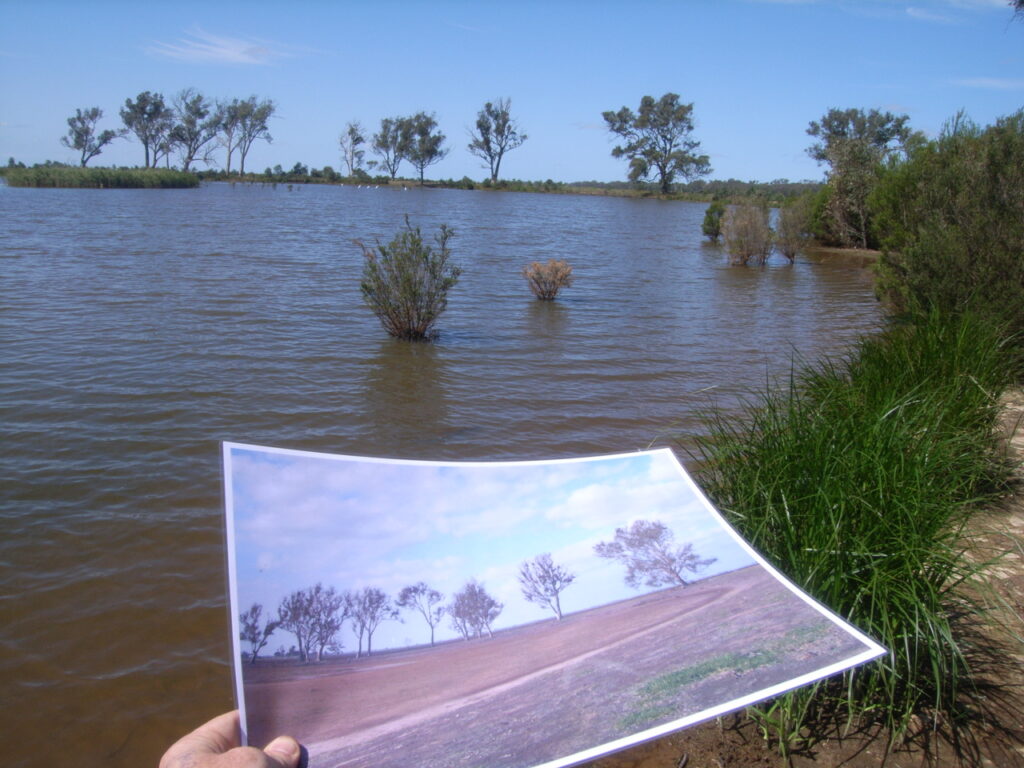 Heart Morass Billabong five years after rehabilitation work had commenced.
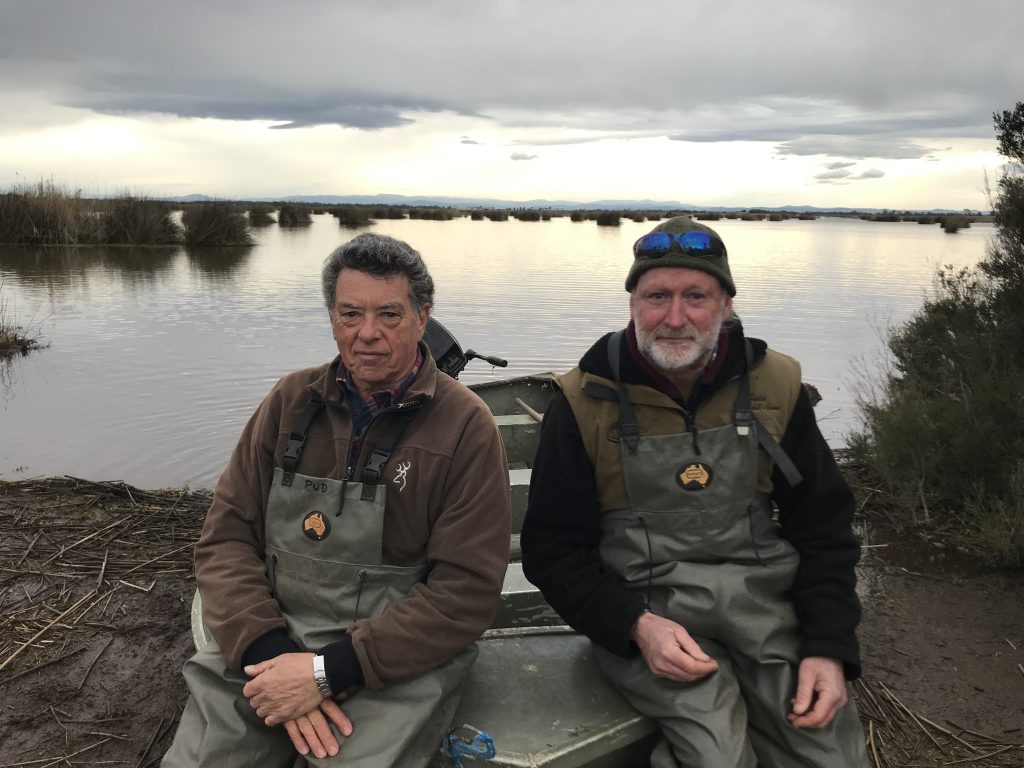 Gary Howard (Pud) & Geoff Glass (Pa) – Heart Morass.
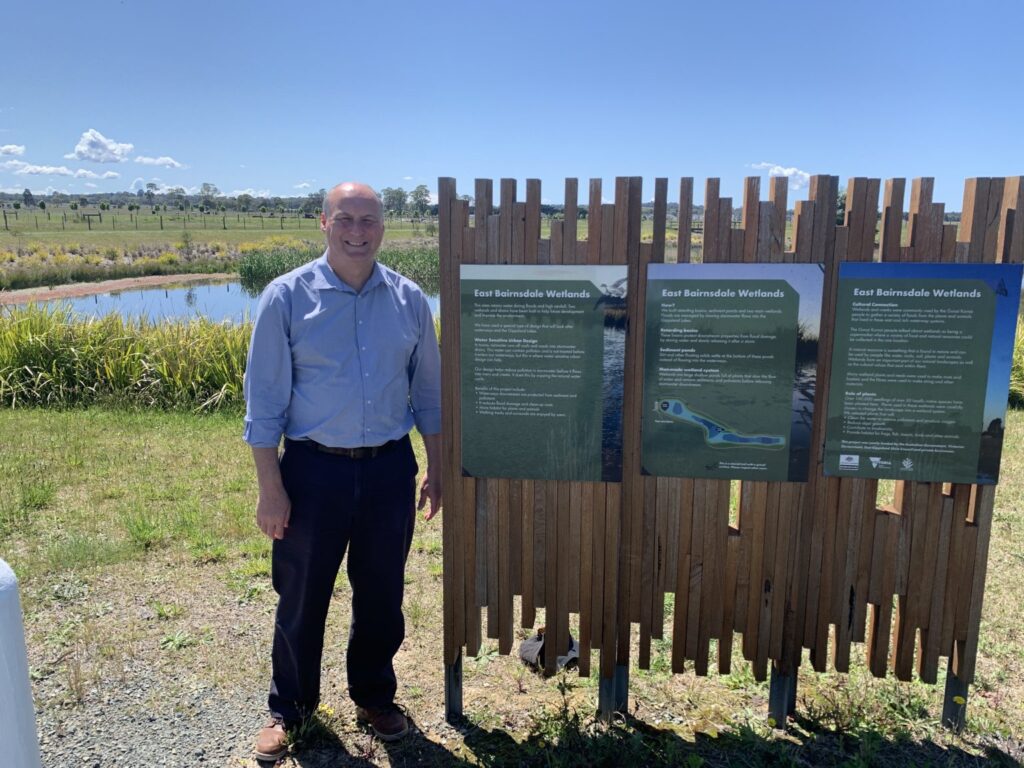 Wayne Burton from East Gippsland Shire at the east Bairnsdale wetland project.
Major flood recovery works to repair damage from June 2021 flood.
The West Gippsland Catchment Management Authority , alongside landholders, other agencies and contractors are set to commence major flood recovery works across the region to to repair damage to waterways caused by the June 2021 flooding which heavily impacted several Gippsland catchments.
“The rain event in June saw a one in 30-year event in the Thomson and Macalister River catchment and something like a one in 75-year event in the Traralgon Creek, so it was pretty huge across the region,” said CEO of the West Gippsland Catchment Management Authority (WGCMA), Mr Martin Fuller.
The WGCMA is charged with responsibility for named waterways in the west Gippsland region both in terms of working with communities prior to flood events but also working to repair damage to waterways and waterway health assets after major floods.
“Waterway management and waterway health are something that we focus on day in, day out. By improving the environmental values of areas also helps to fortify rivers, making them more resilient against extreme events like these most recent floods,” said Martin.
Following the June event, the WGCMA received 100’s of calls from landholders whose land abuts rivers and immediately collaborated on a preliminary response program to repair areas of urgent concern such as major tree removal, fencing repairs and debris removal throughout the region. Working with other bodies such as local government, DELWP, Parks Victoria, Vic Roads and Bushfire Recovery Victoria, more substantial works were coordinated in and around Walhalla where some major damage occurred. Over coming months, WGCMA teams, working with partner agencies, landholders and contractors to continue the coordinated effort that began in June.
Catchment Planning and Delivery Unit Manager at the WGCMA, Dan Garlick says the extent of damage was significant and widespread and when the catchments hopefully dry out, further planned recovery can continue.
“We saw undercutting of river banks and major erosion which carry sediment risks for downstream areas as well as fencing being impacted and waterways impeded by fallen trees. What we’ve been doing since June is firstly assessing that damage, intervening immediately where we have been able to and undertaking planning for the more detailed works required.”
“Walhalla for instance saw significant damage caused by massive flows in Stringers Creek. We’ve been up there, assessed the damage and coordinated effort to repair damage to riverbanks, remove debris and address community priorities including repairs to camp grounds and parks to be utilised by community once again.”
“Over coming months people will see our teams working on more stretches of river doing things like bank stabilisation which includes bringing in rock, rebuilding riverbanks repair fences and vegetation throughout the region.”
“All these works will be done in partnership with communities, other government agencies and landholders so that we can achieve the best possible outcome for those stakeholders as well as the waterway itself,” concluded Dan.
Although floods can be destructive, they are natural and play an important role in waterway health.
Floods provide connectivity between bodies of water that would otherwise remain isolated allowing animals to move between them. Heavy rainfall provides breeding ques and habitat for fish and waterbirds and are an important part of the lifecycle for many aquatic animals. Important floodplain vegetation, such as river redgums, also rely on floods to survive. Floods replenish groundwater supplies and are particularly important for the lower Latrobe wetlands as they provide flushing flows, pushing saltwater out of the system.
In this video, CEO of the West Gippsland Catchment Management Authority Martin Fuller talks about flood recovery, and in this video Dan Garlick the Catchment Planning and Delivery Manager talks about the the damage and some of the works that have been done.