
Partnering for plovers
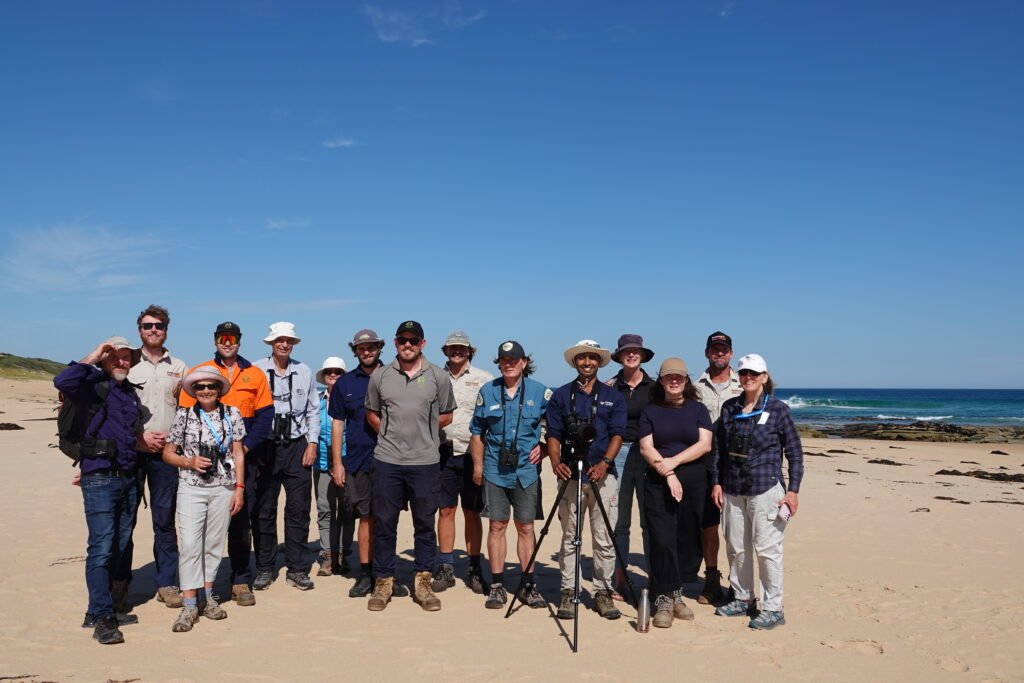
The room was full of plover lovers recently as West Gippsland Catchment Management Authority (CMA) and partners gathered at Kilcunda on Bunurong Country to talk progress on plover protection as part of their Toward Zero Extinctions: Protect the Eastern Hooded Plover project.
This project is funded by the Australian Government Natural Heritage Trust and delivered by West Gippsland CMA, a member of the Commonwealth Regional Delivery Partners panel.
Representatives from Bunurong Land Council Aboriginal Corporation, BirdLife Australia, Bass Coast Landcare Network, South Gippsland Landcare Network, Parks Victoria, Bass Coast Shire Council and the community shared updates on the part they are playing to protect Hooded Plovers (affectionately known as hoodies) along the coastline from San Remo to Sandy Point. This area is home to Victoria’s second largest population of Hooded Plovers so it’s vital that we work together to take action to protect this vulnerable species.
These small, beach-nesting birds and their beach homes are highly vulnerable to disturbance by people, invasion from coastal weeds, rough weather, off-lead dogs and their number one predator – foxes.
The four-year project brings partners together in a united effort to protect nests and chicks through monitoring, targeted fox control and community education.
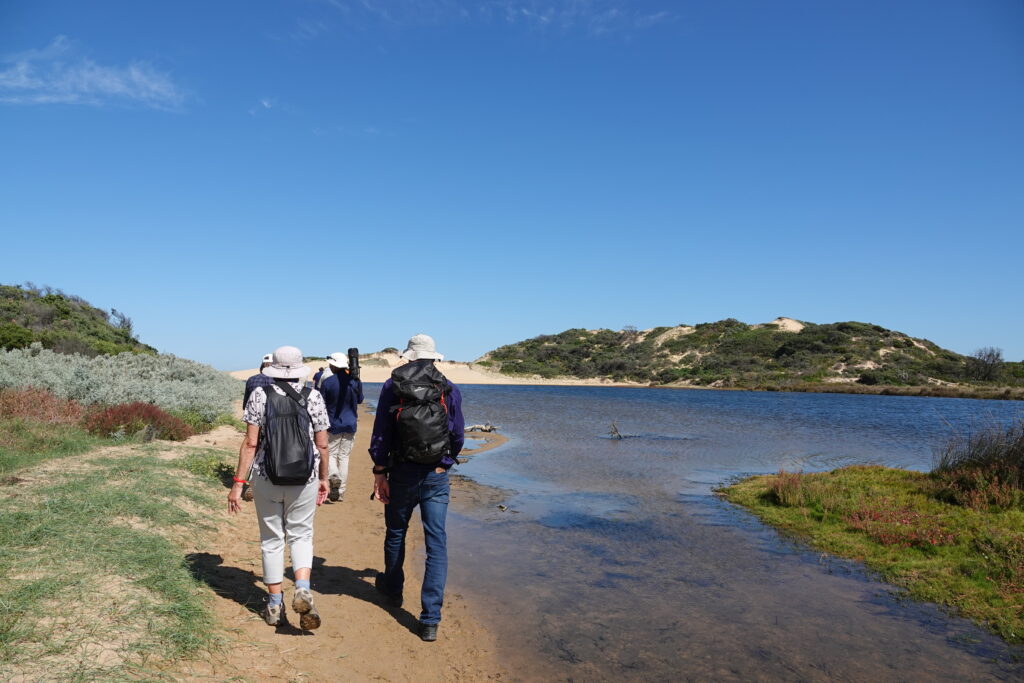
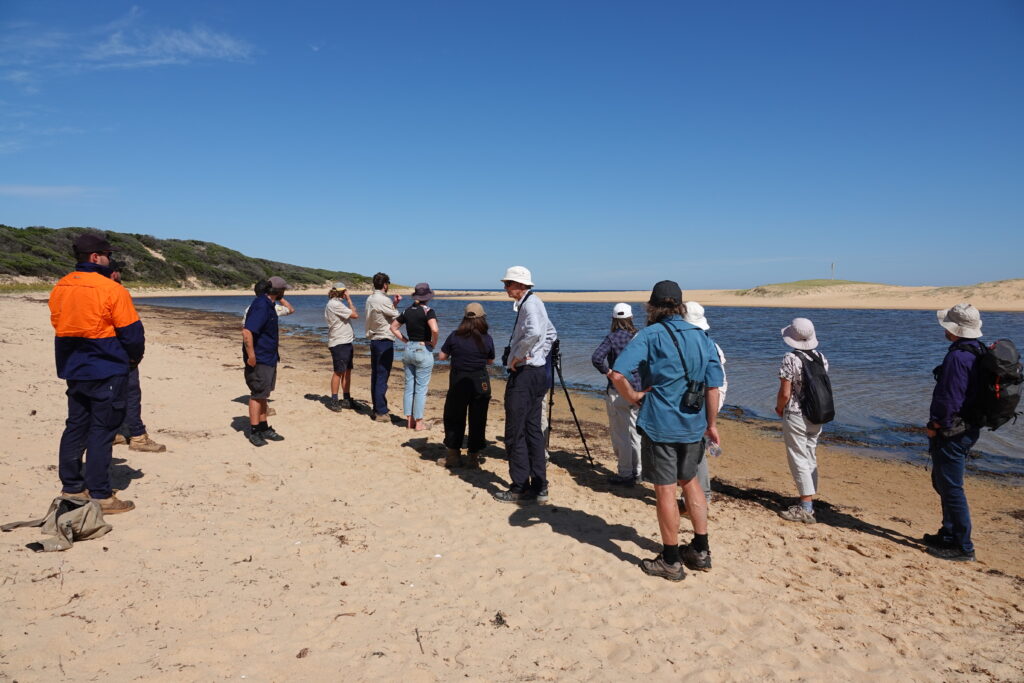
Bunurong Land Council and BirdLife Australia staff and volunteers spent the 2025-26 summer season monitoring and protecting the birds nesting along the coast, along with hosting awareness activities for the community to better understand the birds and their plight.
“It was a challenging start to the season because of the weather patterns until Christmas. Since the weather settled the season has gone really well with a successful number of 31 breeding pairs with 14 fledglings so far. It’s positive to report a similar result to last year – two good years in a row is great. I’d also like to acknowledge the volunteer contribution as “the backbone” of the program and a key reason for the program’s success,” said Kasun Ekanayake, Beach nesting Birds Project Coordinator for BirdLife Australia.
Bunurong Land Council Aboriginal Corporation’s Balirt Biik Rangers monitored and cared for barriytbarriyt, (the Boonwurrung name for Hooded Plovers), at eleven key coastal sites. They noted that connecting with the Birdlife Australia volunteers had been a great addition to their experience so far.
A crucial focus of the project is targeting foxes – the bird’s number one predator with Bass Coast Landcare Network implementing this part of the program. Aaron Stephens reported that they have removed the same number of foxes as the previous year which is a great success. Bass Coast Shire Council has also added resources to the program to target key breeding areas. “We can’t underestimate the importance of this combined effort – it’s about taking the pressure off the birds at critical times of year,” said Aaron.
Brian Martin from Parks Victoria reported they spent the summer working with the community and visitors to monitor behaviour on beaches such as keeping to tracks and dogs on leads where required. Community compliance is one way we can all play our part to protect the plovers and other beach nesting birds and give them the best chance for survival.
“It’s the partnerships and passion that unite to make this project successful – where everyone is involved and supports each other for the good of the hoodies,” said Joel Kilgour, Catchment & Community Project Officer for West Gippsland CMA.
West Gippsland CMA is responsible for over 40,000 kilometres of designated waterways across the region. All of these waterways flow to the Victorian coast, discharging through the Gippsland Lakes, or directly into Bass Strait and the Southern Ocean.