
Pods, seeds and painting the landscape with trees
Trees grow from seeds that spring from a pod, so this National Tree Day, West Gippsland CMA is sowing the seed of just how important trees are for catchments with a special podcast that demonstrates the true superpower of trees.
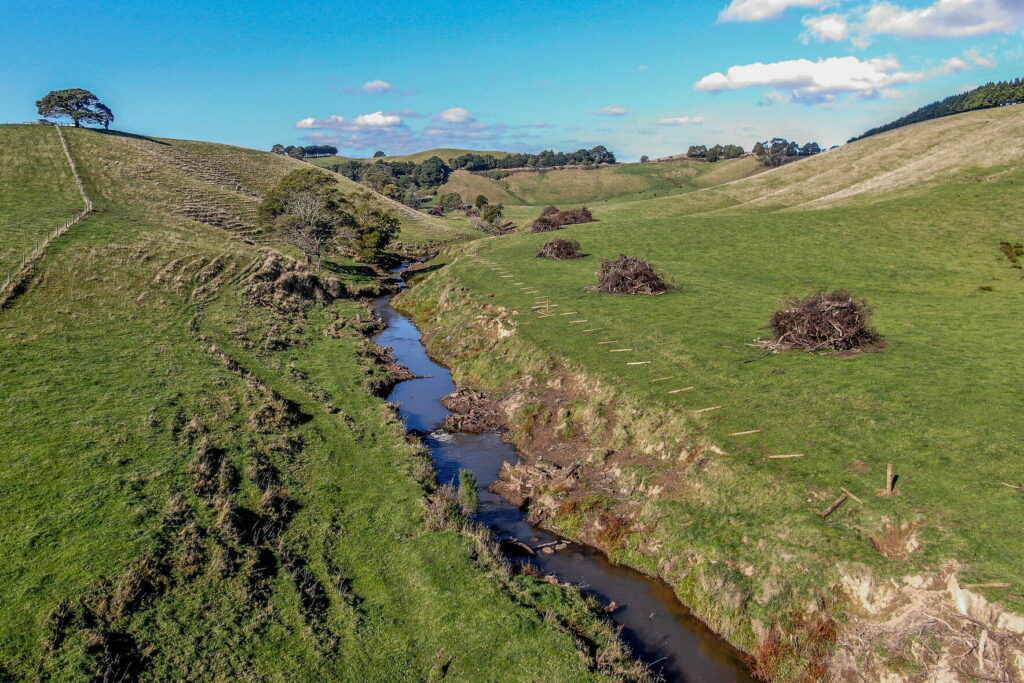
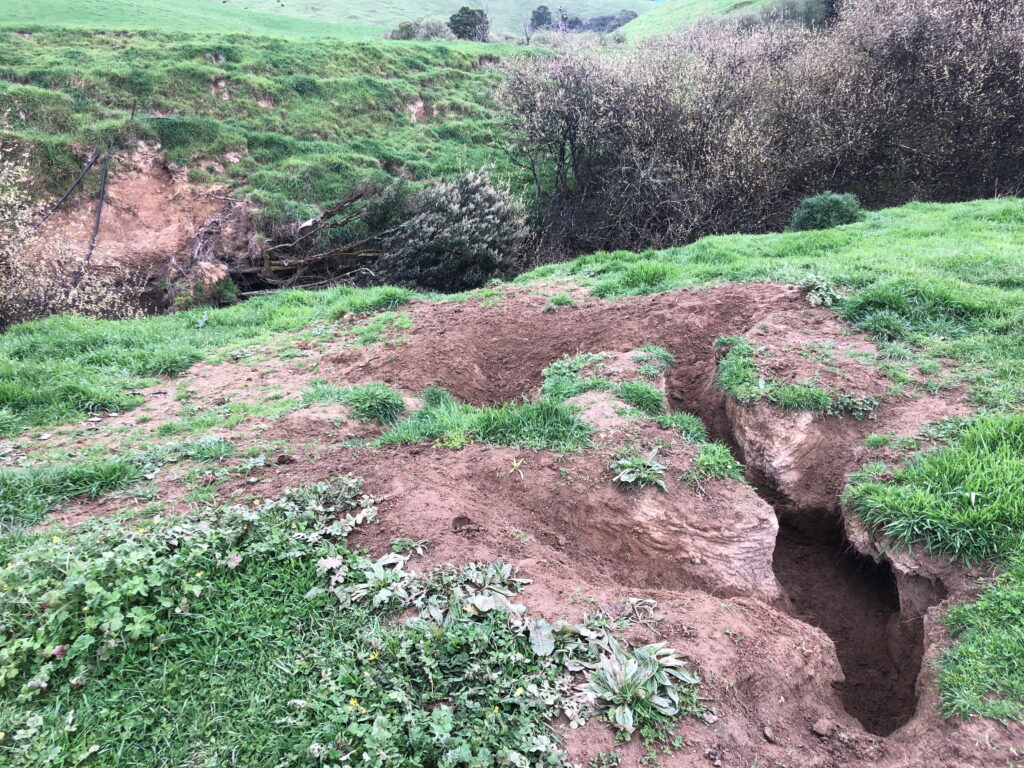
On a picturesque farm just out of Foster, a small patch of remnant bush sits adjacent to paddocks where sheep and cattle graze. A lone creek trickles through the farm, its banks boggy and eroded due to years of stock grazing. This creek eventually flows into the world renowned Corner Inlet Ramsar Site – so what happens in this paddock has an impact on water quality in the inlet.
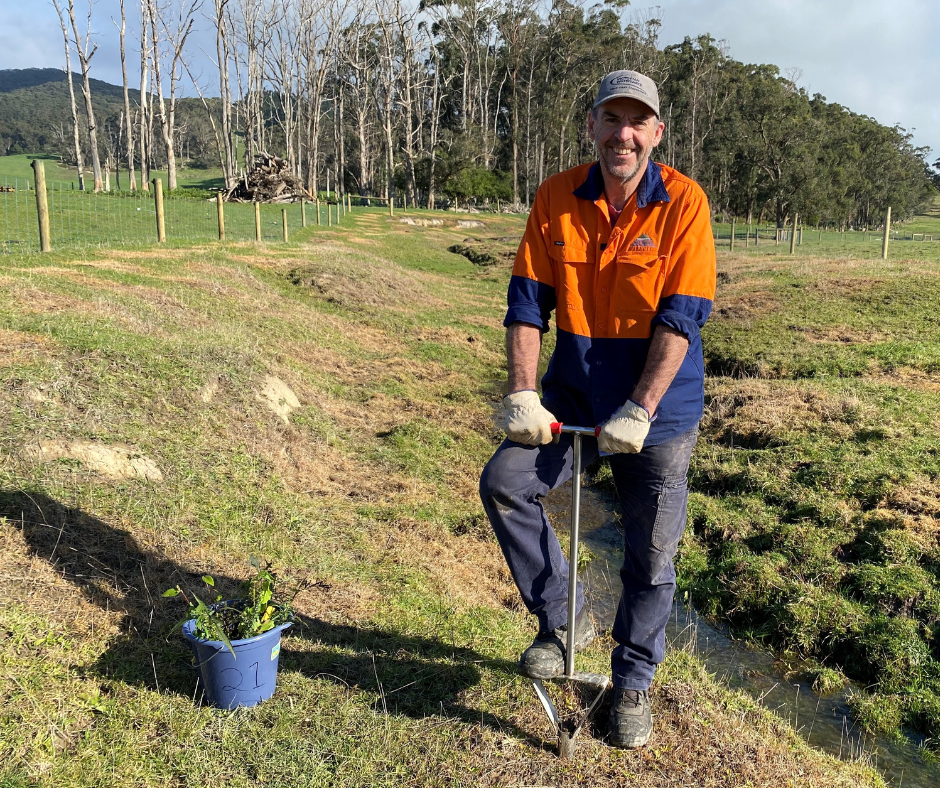
That’s why the CMA team are hard at work planting the next generation of trees next to Old Hat Creek – trees that will work hard to give homes for wildlife and help to keep stabilise banks and keep the waterway flowing, ultimately improving water quality downstream in Corner Inlet.
“Trees are a cornerstone of the CMA’s Corner Inlet Flagship project that aims to address water quality risks to the ecological character of the Corner Inlet Ramsar site and connect habitat along the waterways that flow into it,” said Tanya Cowell, Waterways Project Officer for West Gippsland CMA.
“Our vision is that by 2040, the waterways of the Corner Inlet Basin will be fringed with diverse and connected corridors of native vegetation, and the land managed to reduce downstream environmental impacts to protect the inlet’s valuable seagrass communities. There are community benefits too: improved raw water quality for drinking and industry, amenity of the landscape, and continued access to Victoria’s last sustainable bay and inlet fishery.”
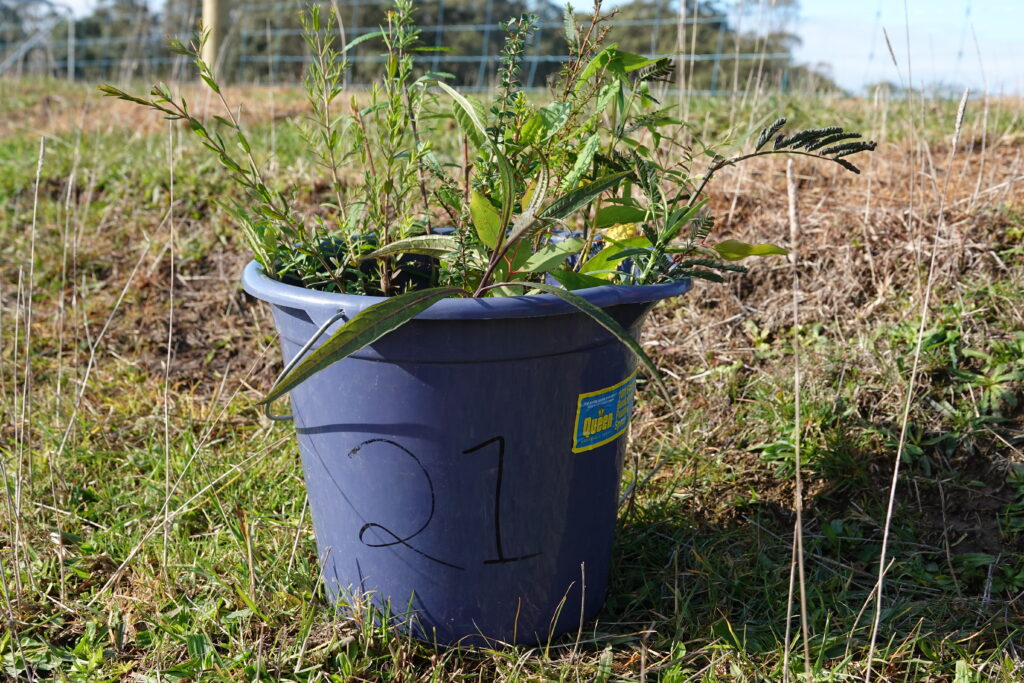
Planting trees is often the last, exciting step of a revegetation project. On this Foster property, four hectares of weed control and two kilometres of fencing were completed before the mix of 5,000 carefully selected shrubs and trees could be put in the ground. Planning for such intricate restoration takes a wealth of knowledge and passionate supporters.
“Putting a tree in the ground is the result of years of planning, and we work with locals who have an intimate knowledge and vast experience of growing trees endemic to the Gippsland region” said Matt Bowler Project Delivery Manager for the CMA who is one of those knowledge holders.
“We are lucky that we have a network and community that supports the seed collection, growing and planting process,” said Matt.
“We have great trust that what we plant will grow because they are suited to the soils and the conditions. When you plant a tree, you are doing it for future generations but in South Gippsland, we get to see the results more quickly because trees grow fast. You plant a tree in south Gippsland you can have a koala in the tree in five years,” said Matt.
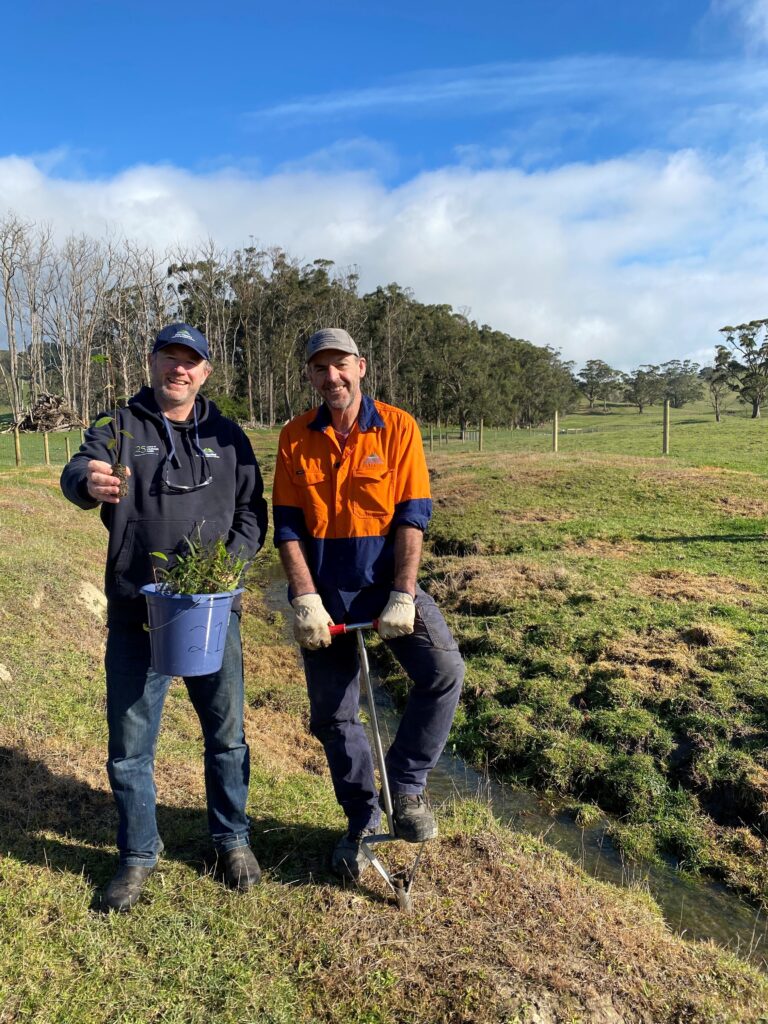
Matt and colleague Richard Allen have planted millions of seedlings which they love seeing grow into forests that will become the next remnant forests as they drive across the catchment. They learn a lot from each planting project using lessons learned to help improve our future works.
“Linking plantings along waterways in a catchment makes sense to us – it protects the creek and creates linkages for wildlife and, tree-loving is infectious!” said Matt.
The Corner Inlet Flagship project is supported by the Victorian Government through the Victorian Waterways Management Program.
West Gippsland CMA is responsible for over 40,000 kilometres of designated waterways across the region and delivers programs for healthy and resilient catchments. All these waterways flow to the Victorian coast, discharging through the Gippsland Lakes, or directly into Bass Strait and the Southern Ocean.
Podcast launching – National Tree Day Sunday 27 July
Tune into join Matt and Rich talk trees and their work on this South Gippsland property.
Become a river lover
Find out more about the work we do and sign up to our e-news for updates.
Power and passion for the Agnes River
It’s all about the power and the passion on this episode of the podcast as we chat with some of the inspiring people involved in a twenty-year partnership project to restore the entire length of the Agnes River and protect the world-renowned Corner Inlet.
Guests:
- Tanya Cowell, Waterways Project Officer at West Gippsland CMA
- Richard (Richie) Allen, Project Delivery Officer at West Gippsland CMA
- Bryan Watterson, local landholder and member of Corner Inlet Landcare
Host:
- Sally O’Neill, West Gippsland CMA
Agnes River is on Gunaikurnai Country and begins in the Strzelecki Ranges, meandering its way into Corner Inlet near the town of Toora. It is well known for the Agnes Falls where the river cascades into a spectacular 59m drop into a deep picturesque gorge.
Last year the CMA removed the last remaining stand of willow trees on the Agnes – a special milestone for the CMA and the community members involved in this project.
Last willow gone from the Agnes River
West Gippsland Catchment Management Authority (CMA) is proud to have removed the last remaining stand of willow trees from the entire length of the Agnes River – a first for the organisation and a win for the environment.
“Willows are a problem for rivers and removing them from 100% of the Agnes is a special milestone for the CMA,” said CEO Martin Fuller.
“The Agnes is a flagship river for our region because it runs into Corner Inlet and what happens along its length has a flow on effect for the world renowned wetland.”
West Gippsland CMA has recently celebrated 25 years and the team has been chipping away at removing willows across the catchment since it was established in 1997.
Someone who has been on the ground since this project began is Project Delivery Officer, Richard (Richie) Allen who has worked with the CMA for over 20 years. He forms partnerships with landholders to map out the works required and then creates an agreement to implement them.
“In the early days there was a different mindset, so we chipped in and just did what we could. As a few landholders came on board, the success spread like wildfire. Now people are queuing up to have works done because they see the benefits like how it’s much easier to manage their stock,” said Richie.
“Willows are introduced, impacting on waterways by diverting the water flow, changing the channel, making the river wider, and have a massive leaf drop in one hit – which changes nutrients in the water.”
The next step after removing willows and weeds is planting the riverbanks with native vegetation. The team will soon put thousands of indigenous species in the ground using a mix of 30% eucalypts and the remaining understorey plants. This links habitat which benefits the river health and wildlife.
“So far, we have fenced and revegetated over 90% of the river. By the end of 2023-24, this will be 100% and I can see how the river is ‘reclaiming’ itself and wildlife is starting to return,” he said.
To date, works on the Corner Inlet and Agnes River project, funded by the Victorian Government as one of its Flagship Rivers have also included:
- fencing 78.5 kilometres of river frontage at 65 sites
- planting 235,838 trees and shrubs to restore 237.63 hectares
- undertaking weed control on 414,51 hectares at 218 sites.
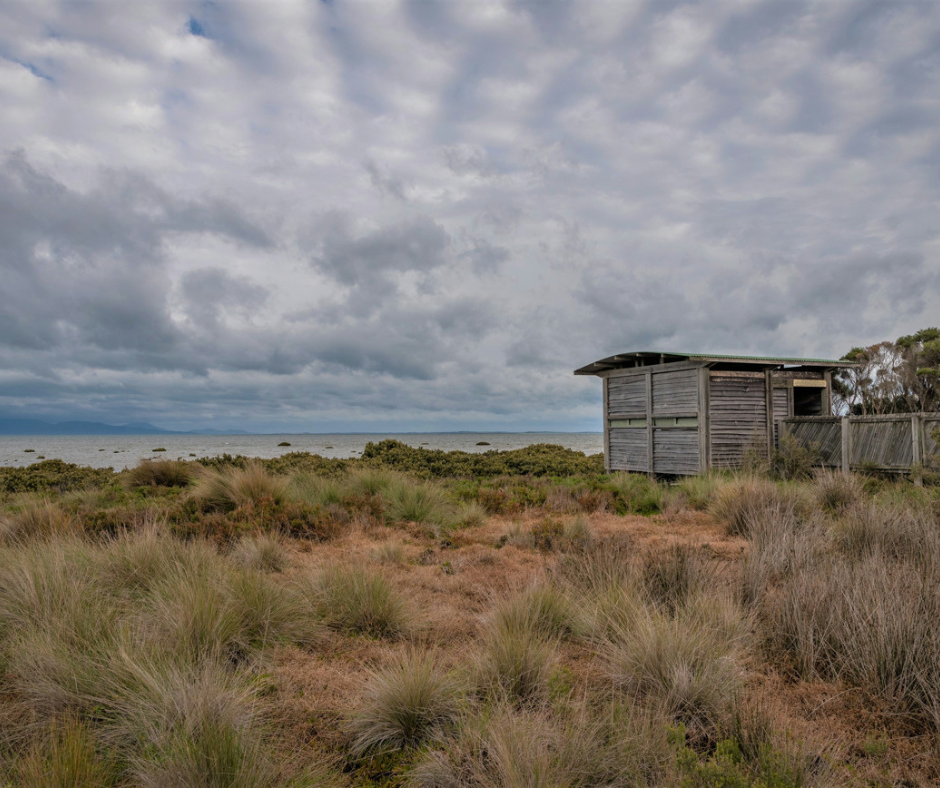
All the positive works along the Agnes upstream ultimately flow down to benefit fish, birds and seagrass in Corner Inlet. The buffer created by the weed removal, fencing and revegetation improves conditions for seagrass to flourish by reducing nutrient and sediment flowing into the inlet.
Agnes River is on Gunaikurnai Country and begins in the Strzelecki Ranges, meandering its way into Corner Inlet near the town of Toora. It is well known for the Agnes Falls where the river cascades into a spectacular 59m drop into a deep picturesque gorge.
This large-scale restoration project is one of 19 Flagship Waterway projects funded as part of the Victorian Government’s $248 million investment over four years (2020-2024) to improve the health of waterways and catchments across regional Victoria.