
Testing the tech: How Gippsland farmers are driving irrigation into the future
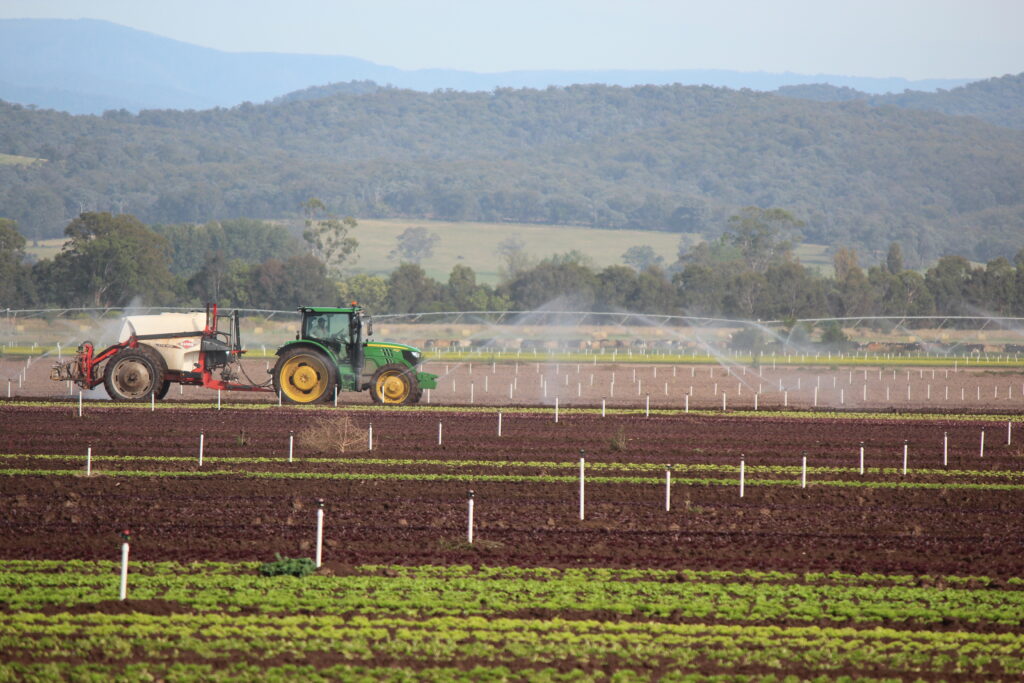
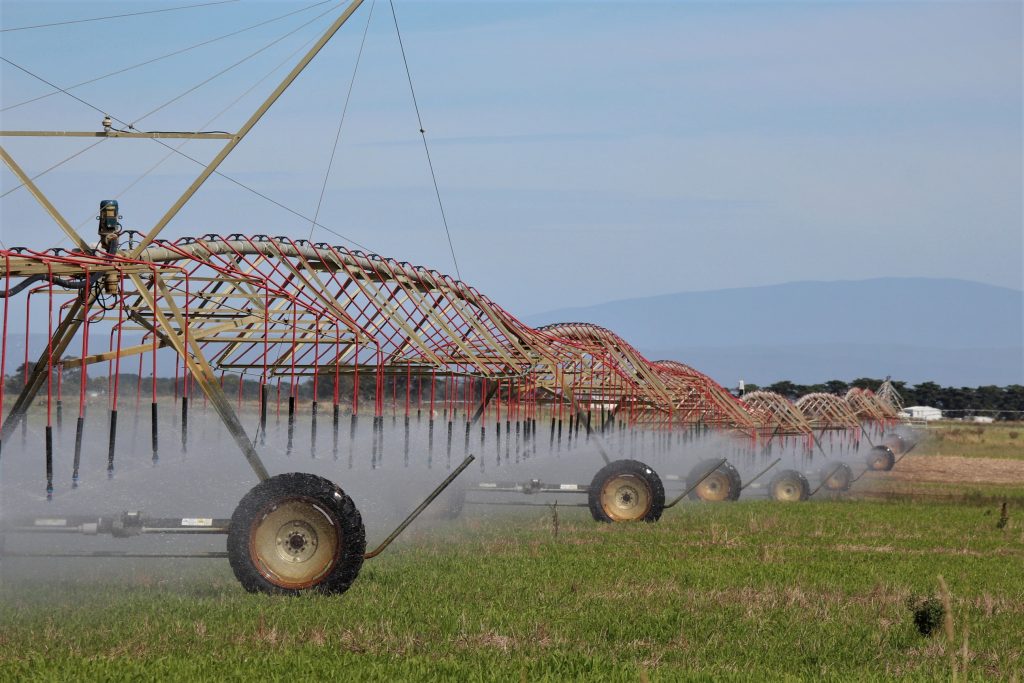
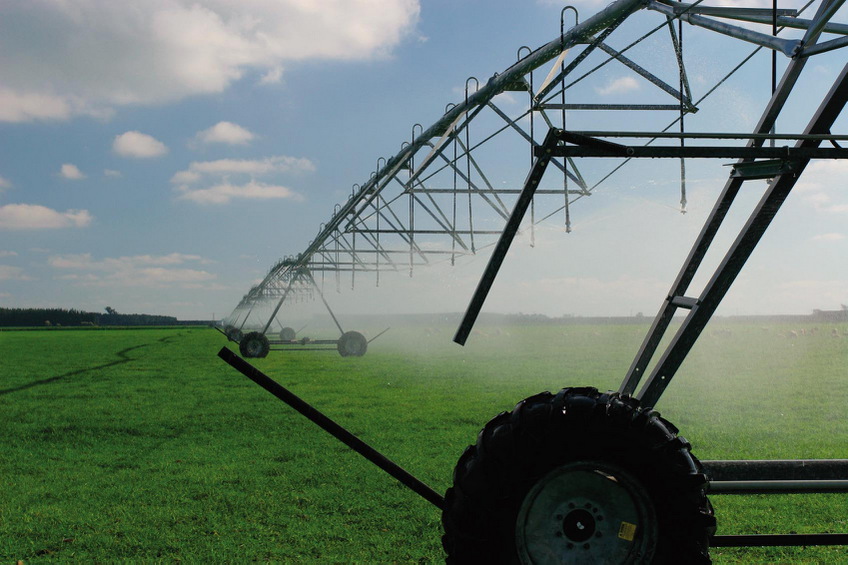
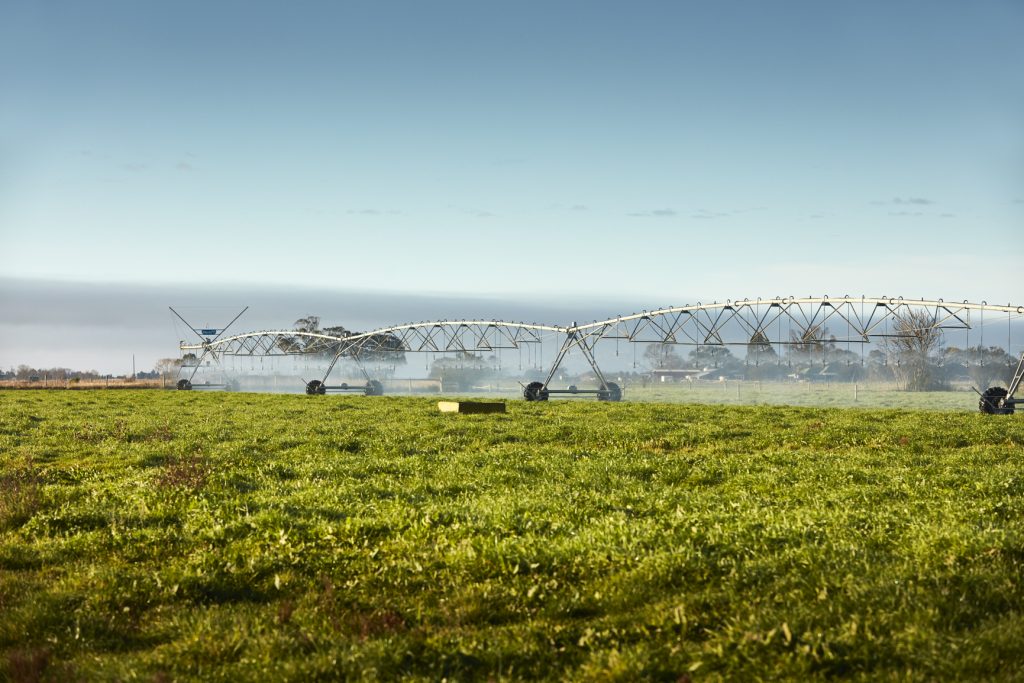
Trailblazing Gippsland farmers are using artificial intelligence (AI) and smart tech to save water, money and protect local waterways while inspiring others to do the same under the latest round of Irrigation Demonstration Trials.
In a joint initiative between West Gippsland Catchment Management Authority (the CMA) and Agriculture Victoria, six farmers in Central Gippsland have received grants to test irrigation technology and then spread the word about what they learn.
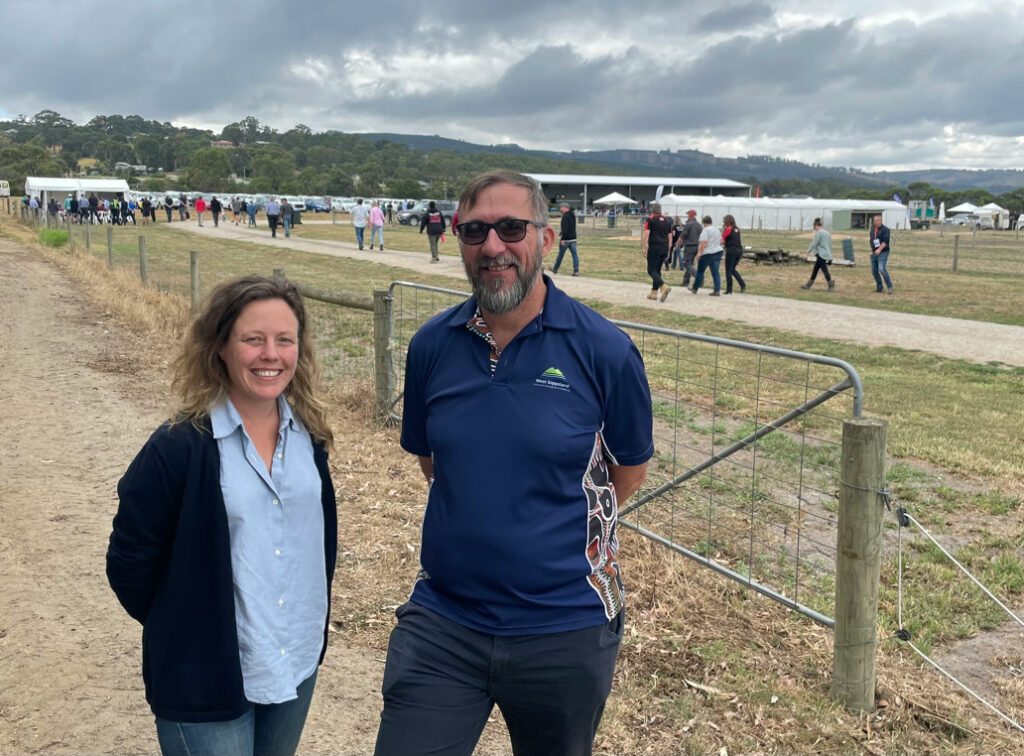
“The Irrigation Demonstration Trials Program is specifically designed to showcase Gippsland’s amazing farmers who are trialling and implementing new and innovative technologies and practices on their farms for the benefit of the whole region,” explained Anthony Goode, Sustainable Irrigation Program Coordinator at West Gippsland CMA.
“These farmers are stepping forward and essentially acting as guinea pigs to help us understand how technology like AI, GPS guidance and solar powered automation can work best on irrigation systems in Gippsland, helping other irrigators make decisions about whether the technology is right for them.”
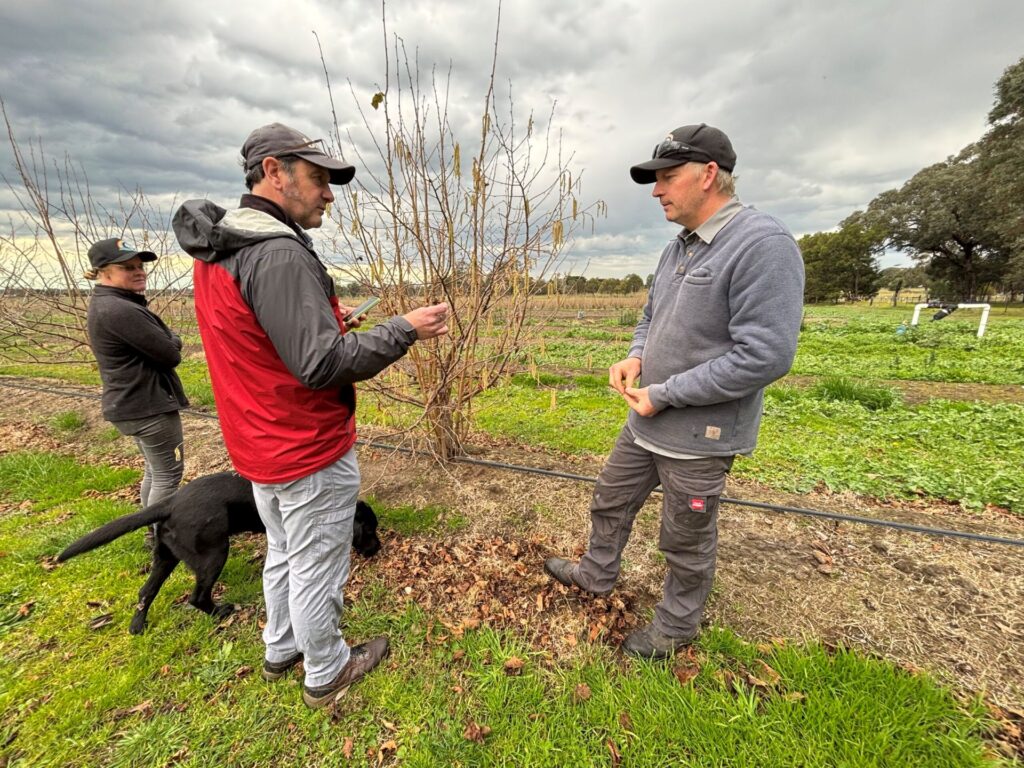
For example, at Rainbow Creek Nuts in Cowwarr, farmers Chris and Lisa are piloting a data-driven irrigation system that combines sensors with automation – and ultimately AI – to deliver precisely the right amount of water at the right time.
“The project will help give me a real-time picture of what the orchard is doing – in the soil, the trees and in the weather - so that I use my water on live signals and not guesswork,” said Chris.
Other farms hosting demonstrations are Jennings Potatoes in Thorpdale, Berry Dairy in Maffra, and dairy farms in Newry, Sale and Tinamba and their stories will be shared across the project.
Agriculture Victoria Regional Manager Irrigation for Gippsland, Sarah Killury, said: “While each project is different, they share a similar goal and that’s to drive irrigation best practice in the region while protecting the environment.”
“We’re excited to see the latest demonstration trials get underway and encourage all irrigators to follow the journey over the next two years. We’ll be sharing progress and results from all six sites through regular video updates, farm field days and newsletters.” said Sarah.
This program is a part of the Department of Energy, Environment and Climate Action’s Sustainable Irrigation Program (SIP), implemented in Gippsland by Agriculture Victoria and West Gippsland CMA.
Become a river lover
Find out more about the work we do and sign up to our e-news for updates.
Celebrating a 25-year pivot towards sustainable farming future
This year, West Gippsland Catchment Management Authority (CMA) is celebrating the 25th anniversary of its sustainable irrigation program and the long-term partnerships that have been central to its success.
The joint initiative between the CMA, Agriculture Victoria and local farmers has resulted in a remarkable transformation of irrigated land and water use across central Gippsland.
Since launching in 2000, the successful program has delivered over 1,200 irrigation improvement projects in the Macalister Irrigation District (MID) and across the Lake Wellington Catchment – home to important river systems like Durt’Yowan (Latrobe), Wirn wirndook Yeerung (Macalister) and Avon rivers.
“The CMA is incredibly proud to celebrate over two decades of effort to reduce the environmental impact of irrigation by keeping water and nutrients on farm and out of local waterways that flow into the Gippsland Lakes,” said CEO of West Gippsland CMA, Martin Fuller.
“We’re pleased to share what’s been achieved in partnership with Ag Vic, Southern Rural Water, Gippsland Water, Wellington Shire, the Environment Protection Authority Victoria, GippsDairy, Food and Fibre Gippsland and of course the irrigation community.
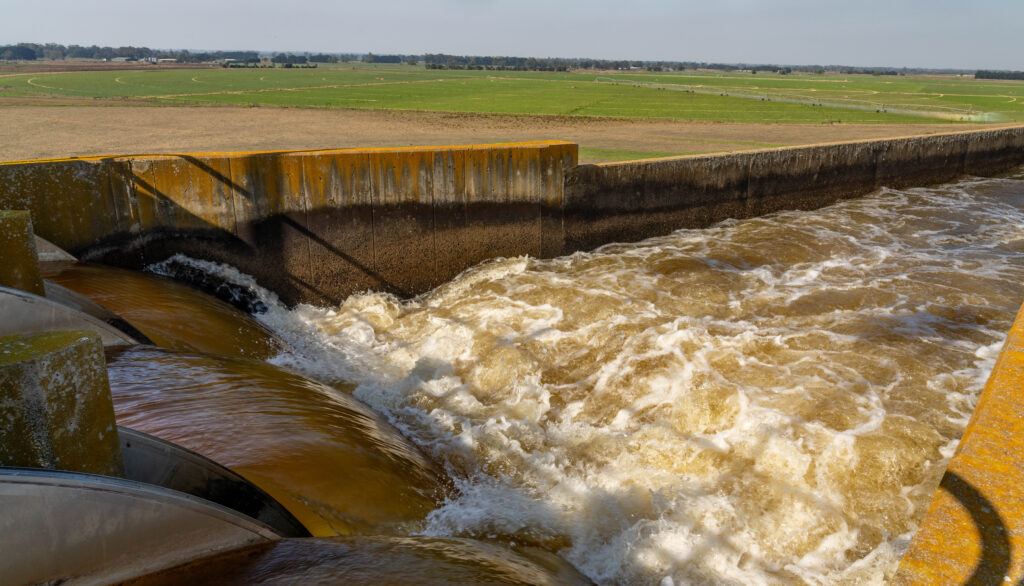
“Thanks to the sustained, collective efforts of farmers, agencies and local irrigation communities, we’re now seeing a total of 47 gigalitres of water worth $85 million dollars being saved every year. That’s a huge financial benefit for irrigators and a boost to water security for the region’s agricultural industry.”
Encouraging irrigators to embrace sustainable irrigation practiced has been key to the program’s success and over the years attitudes have shifted.
“Twenty-five years ago, environmental challenges weren’t as well understood,” explained Anthony Goode, the CMA’s Sustainable Irrigation Program Coordinator who’s worked on the program for 14 years.
“It’s a huge credit to those farmers who put their hands up in the early days to get involved and trial new irrigation methods and systems for the benefit of the wider irrigation community.”
“It’s not an exaggeration to say we’ve now partnered with nearly all landholders in the MID, achieving 94% coverage of the district with farm irrigation plans. Combined with the 179 spray conversions, 299 reuses systems and 70 best practice surface irrigation projects it adds up to a remarkable, long-term transformation of irrigated farmland.”
And the results speak for themselves, with over 46 gigalitres of nutrient rich water carrying an estimated 23 tonnes of phosphorus being retained on farm every year for the benefit of soil health and pasture productivity. This reduces the need to buy-in synthetic fertilisers all while protecting surrounding waterways from run-off.
“A classic win-win,” said Anthony.
Agriculture Victorian Irrigation Extension Officer Alexis Killoran said: “The transformation doesn’t end with the hundreds of millions of dollars of farmer investment into farm plans and irrigation infrastructure on farm, though that in itself is a testament to the farmers of the region.
“There is also a continual demand from farmers and their staff for irrigation training and demonstrations offered by Agriculture Victoria extension staff. This ranges from the basics of irrigation workshops offered to new staff, through to technical workshops on pump efficiency or soil moisture monitoring.
“This emphasis on knowledge growth and upskilling leads to excellent productivity and environmental outcomes, with farmers and staff irrigating to best practice standards using modern infrastructure.”
Following the success of the last 25 years, the program is forging into the future. Now, even more irrigators are set to benefit as it expands beyond the MID for the first time, with producers in Thorpdale coming on board as well as farmers along Durt’Yowan (Latrobe River) and in the upper reaches of the Lake Wellington catchment.
Looking ahead to the next 25 years, Anthony is excited to continue working with partners and farmers to keep land and waterways healthy and in good shape for future generations.
“Our vision is to reach a point where we can proudly say that the irrigation community is having zero impact on waterways and is actually benefiting waterways and catchment health. That will be a fantastic day,” concluded Anthony.
This program a part of the Department of Energy, Environment and Climate Action’s Sustainable Irrigation Program (SIP), implemented in Gippsland by Agriculture Victoria and the WGCMA.
West Gippsland CMA is responsible for over 40,000 kilometres of designated waterways across the region and delivers programs for healthy and resilient catchments. All these waterways flow to the Victorian coast, discharging through the Gippsland Lakes, or directly into Bass Strait and the Southern Ocean.
Become a river lover
Find out more about the work we do and sign up to our e-news for updates, you can also sign up for Environmental Water updates.
Water the key to future proofing Gippsland farms
Access to water means everything to farmers and working to maximise this precious resource is key. Recently, West Gippsland Catchment Management Authority (CMA) was proud to host the state’s sustainable irrigation support staff for a two-day forum, in collaboration with Agriculture Victoria. Attendees shared knowledge and heard from Gippsland farmers on the ground where the impacts of their work are showcased best.
“For the past 25 years, West Gippsland CMA’s sustainable irrigation program has worked to reduce the environmental impact of irrigation and increase efficiencies and productivity for busy farmers,” said Anthony Goode, Sustainable Irrigation Project Officer for West Gippsland CMA.
“This successful model is replicated in CMAs across Victoria supported by Agriculture Victoria through Department of Energy, Environment and Climate Action.
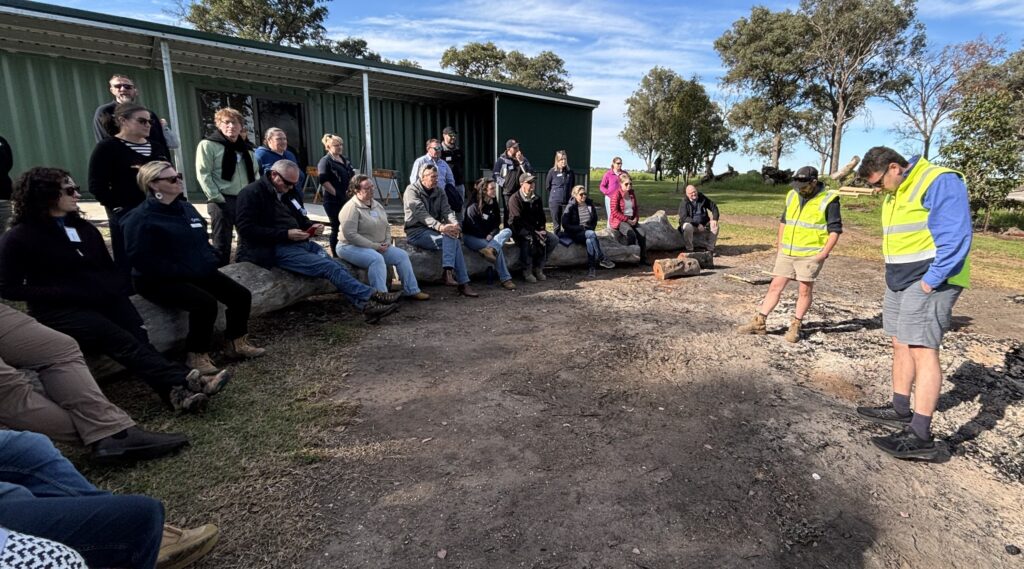
A highlight of the program was a full day farm tour across the Gippsland region, to meet the farmers and learn about the benefits, challenges and opportunities of sustainable irrigation firsthand.
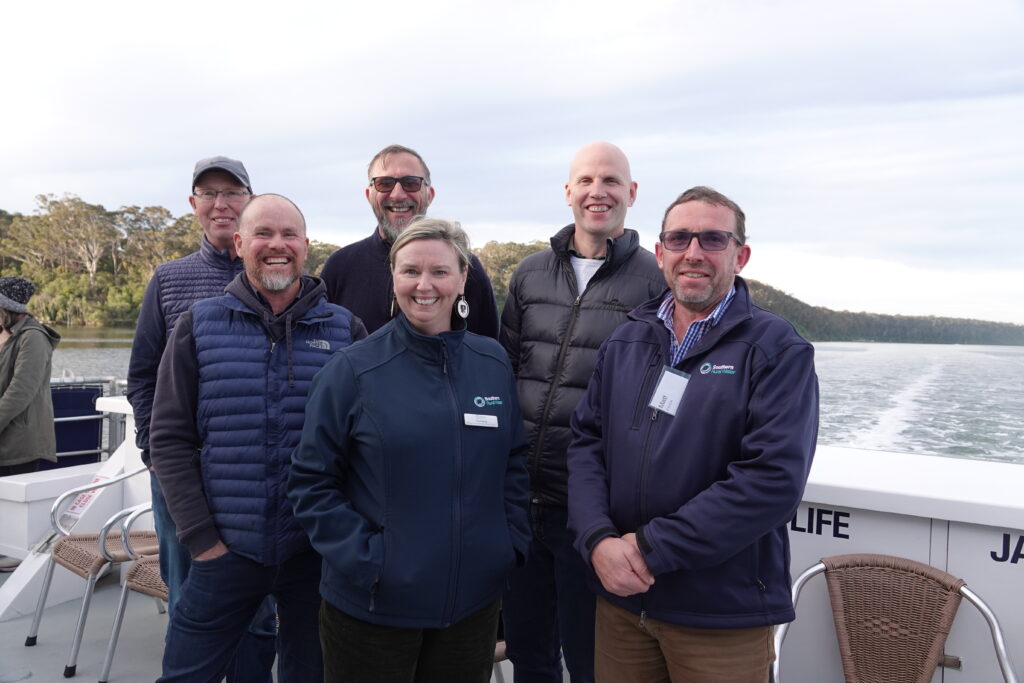
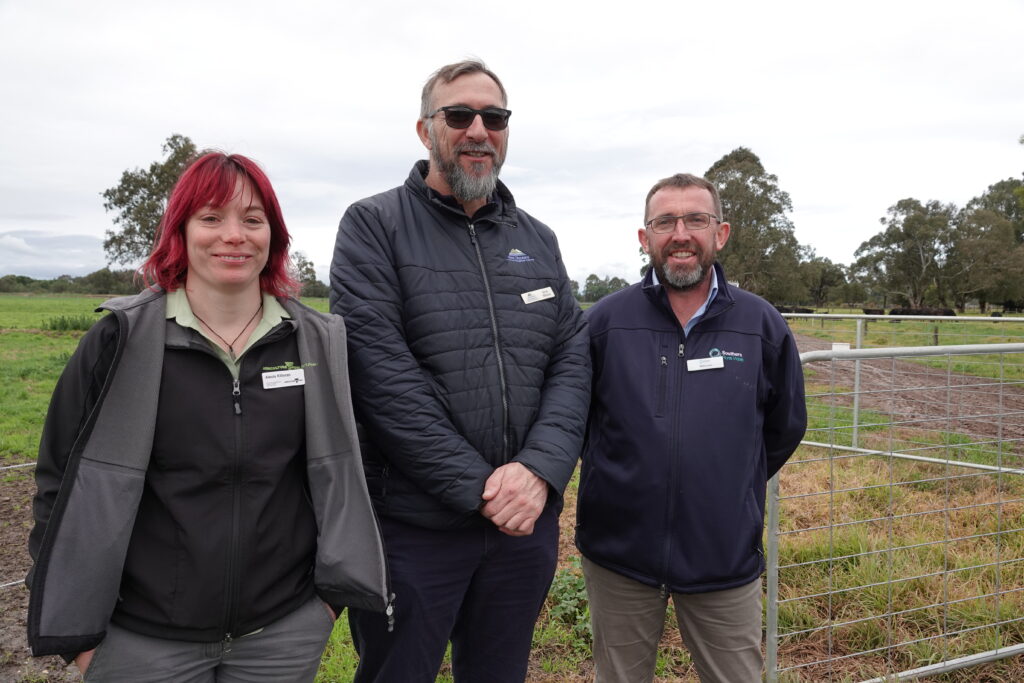
On board the bus were representatives from CMAs across the State, DEECA, Agriculture Victoria and Southern Rural Water. As they travelled, CMA and Agriculture Victoria team members gave a quick history of the Macalister Irrigation District.
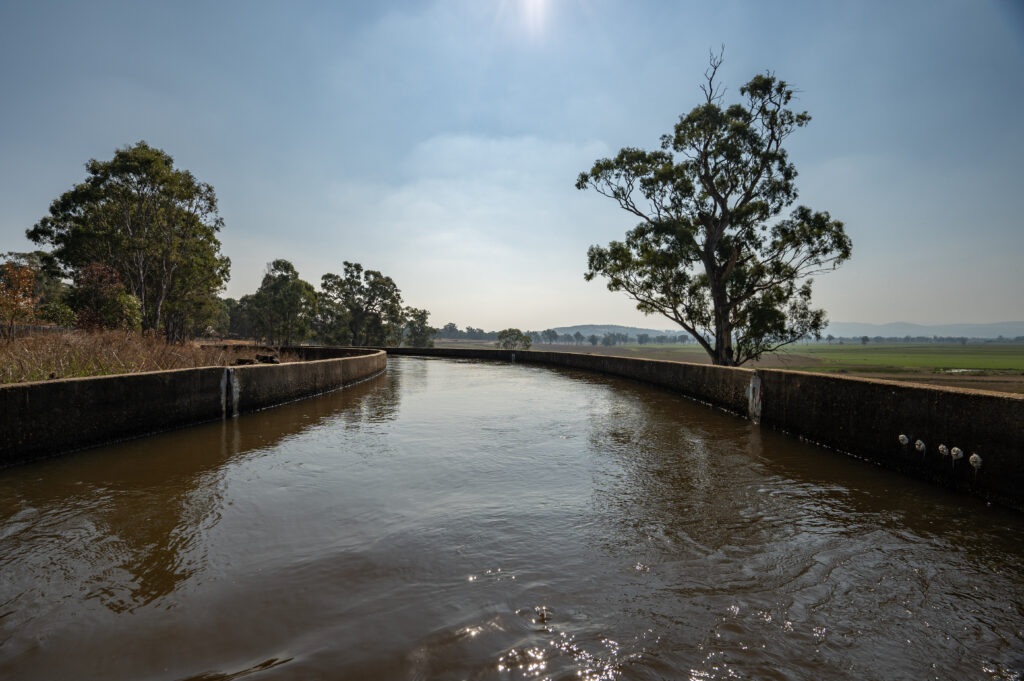
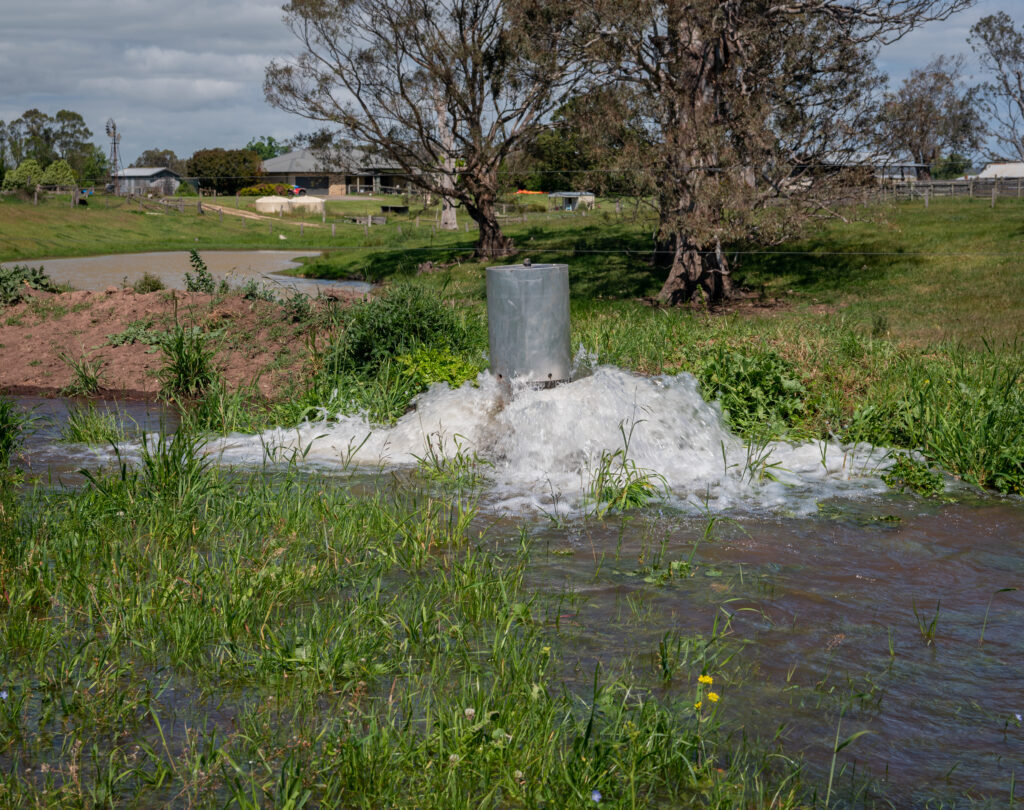
They discussed tackling the ongoing challenge of irrigation-induced salinity. The area’s intricate drainage network was developed in the 1960s with 500 kilometres of constructed drains and 19 groundwater control pumps. These systems, along with improving irrigation efficiencies and modernisation have helped to ensure a prosperous and resilient irrigation industry for the region.
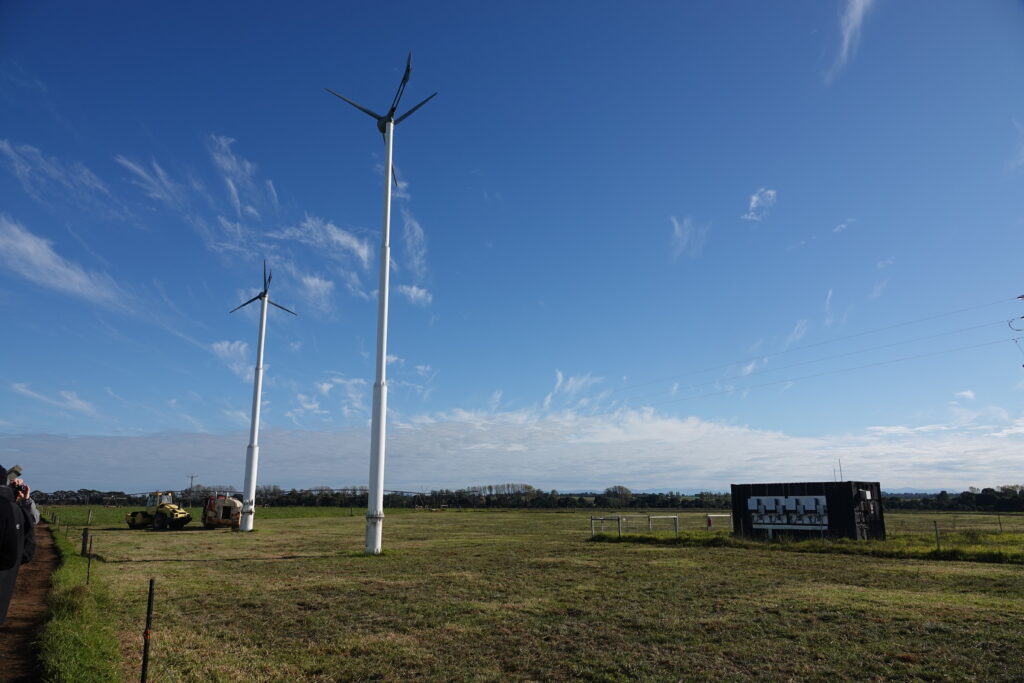
First stop on the tour was Willandra Farms in Clydebank. The certified organic farm sits in stark contrast to surrounding properties with swathes of revegetation, wetlands, solar panels and wind turbines. Operating on regenerative principles, the family has a desire to become carbon neutral and is already running fixed spray and pipe and riser irrigation using solar power.
Wilco Droppert and Sandra Jefford, their son Luke and daughter Sophie thrive on innovation and are always ready to participate in trials. Most recently it was the site of a sustainable irrigation demonstration site showcasing their ability to maximise solar energy utilisation in their irrigation system.
Son and second generation farmer, Luke, spoke passionately about the farm and their sustainable irrigation journey and how it is a living representation of the family’s values.
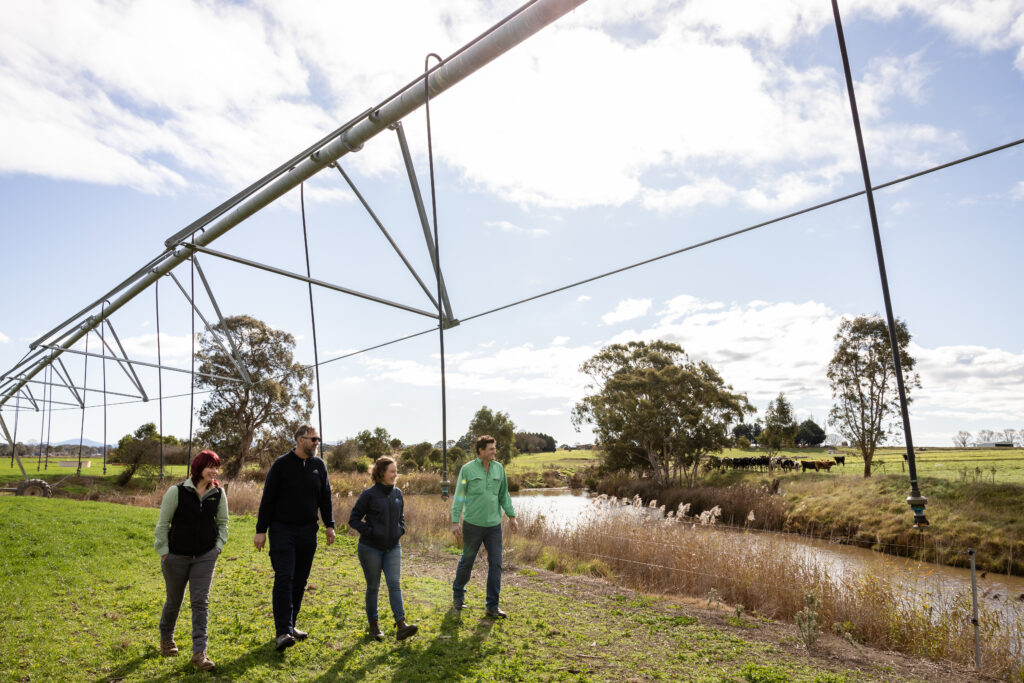
Next up was Jessica and Stephen Knight’s Dairy Farm in Llowalong, located within the area of the proposed Macalister Fresh irrigation district expansion, being planned by Southern Rural Water. The couple’s focus is on farm development for future water security and best practice supported by their detailed Farm Plan.
The farm is located next to the Avon, the fastest rising river in the southern hemisphere. “We need to get our pumps out every time someone sneezes,” joked Jess as she welcomed the group.
Jess and Stephen gave a great summary of the importance of water security in farming and how embracing opportunities and new technologies when they happen is a key strategy for successful farming.
Irrigation farm planning, a process supported by the Sustainable Irrigation Program, is fundamental to helping achieve their business goals.
“Farm plans are an essential part of the process,” Caelan McIntosh, Agriculture Victoria Irrigation Extension Officer told the group. “The plans give farmers, regulators and importantly the bank managers, all the information and confidence they need to invest in irrigation and their business.”
The couple has put in three new pivots, pipe and risers and a turkey’s nest dam.
“Our biggest issue is water security. These measures to secure water allowed us to expand and was a catapult for all we’ve achieved. You’ve got to be on the front foot and make decisions quickly – that’s what the drought taught us,” said Jess.
“But the decisions have to stack up – it’s a business not a hobby,” Stephen quickly added.
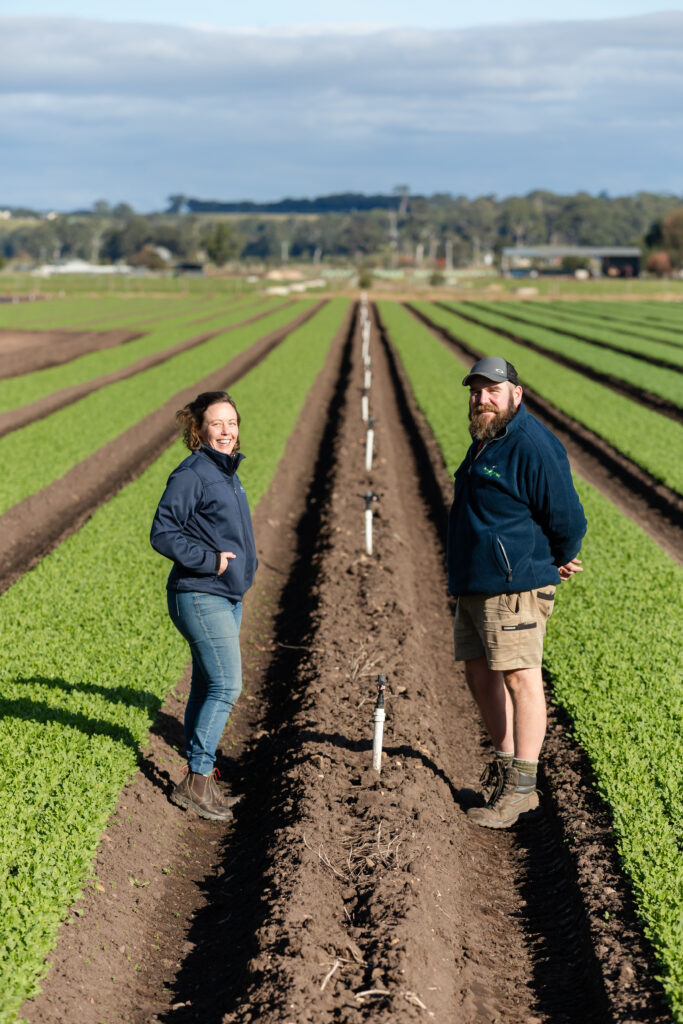
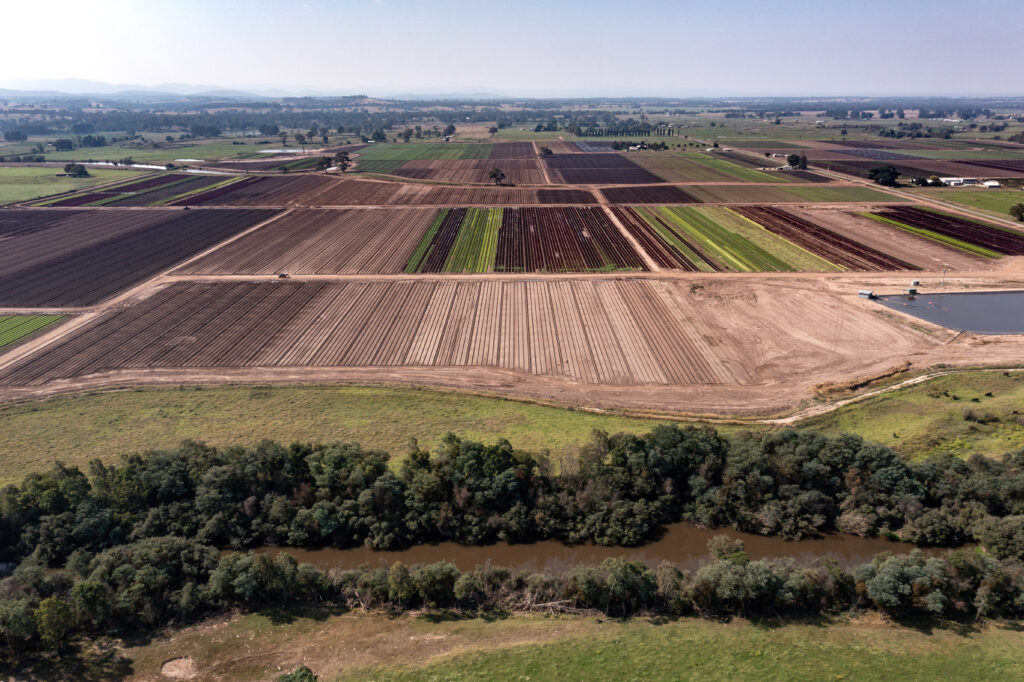
The group then travelled to Lindenow Valley on the Mitchell River in East Gippsland to see vegetable production in action in the rich, fertile Lindenow Valley. Bulmer Farms is one of approximately 12 commercial vegetable growers in the Valley and is one of Australia’s biggest salad producers.
The team explained that the 2,000 acre farm produces baby leaf salads and employs 130 people. The farms utilises water allocations from the Mitchell River and some groundwater and has also built a 300 Megalitre storage dam to further increase their water security. “Water is a future proofer,“ they told the group.
Anthony Goode summed up the event as the bus pulled back into Sale. “Days like this highlight the importance of working together over decades to make real and lasting change. We were incredibly proud to showcase the region and its people, learn from each other and talk through the challenges and opportunities ahead and how we can use innovation and collaboration to tackle them head on.”
West Gippsland CMA has been partnering with Federal, State and local agencies, industry groups and landholders to improve the health of the Gippsland Lakes for over 25 years. Their Sustainable Irrigation Program in the Macalister Irrigation District supports innovative irrigation and nutrient management technologies in the Lake Wellington Catchment. Its success relies on famers like those met on the tour and of irrigators being prepared to host demonstration sites on their farms.
Implemented with Agriculture Victoria, in partnership with Southern Rural Water, the Sustainable Irrigation Program supports local irrigators to implement on-farm management practices that improve water use efficiency and reduce agricultural runoff. Over the 25 years, the cumulative efforts of the Program and the irrigation community have now reduced exports of nutrient rich agricultural runoff by over 46 billion litres of water each year and prevent 23 tonnes of Phosphorous from entering the Gippsland Lakes.
West Gippsland CMA is responsible for over 40,000 kilometres of designated waterways across the region and delivers programs for healthy and resilient catchments. All these waterways flow to the Victorian coast, discharging through the Gippsland Lakes, or directly into Bass Strait and the Southern Ocean.
Become a river lover
Find out more about the work we do and sign up to our e-news for updates.
Casting call for Gippsland producers to star in sustainable irrigation program
It’s not quite Farmer Wants a Wife, but it’s just as important! West Gippsland Catchment Management is on the hunt for irrigators to join us in ensuring Gippsland irrigation practices are world class.
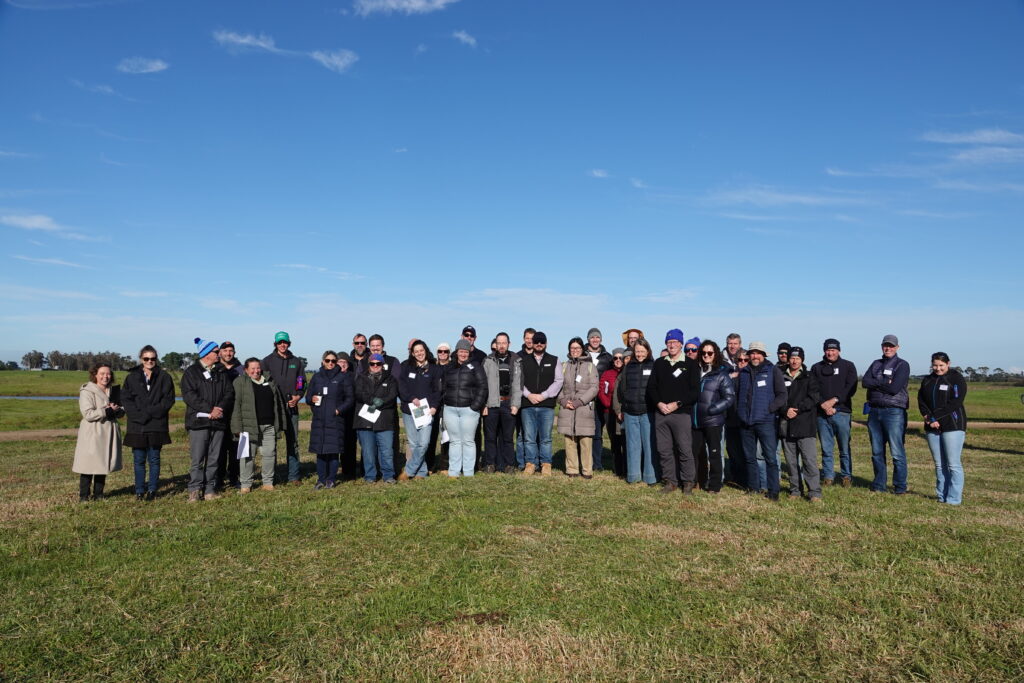
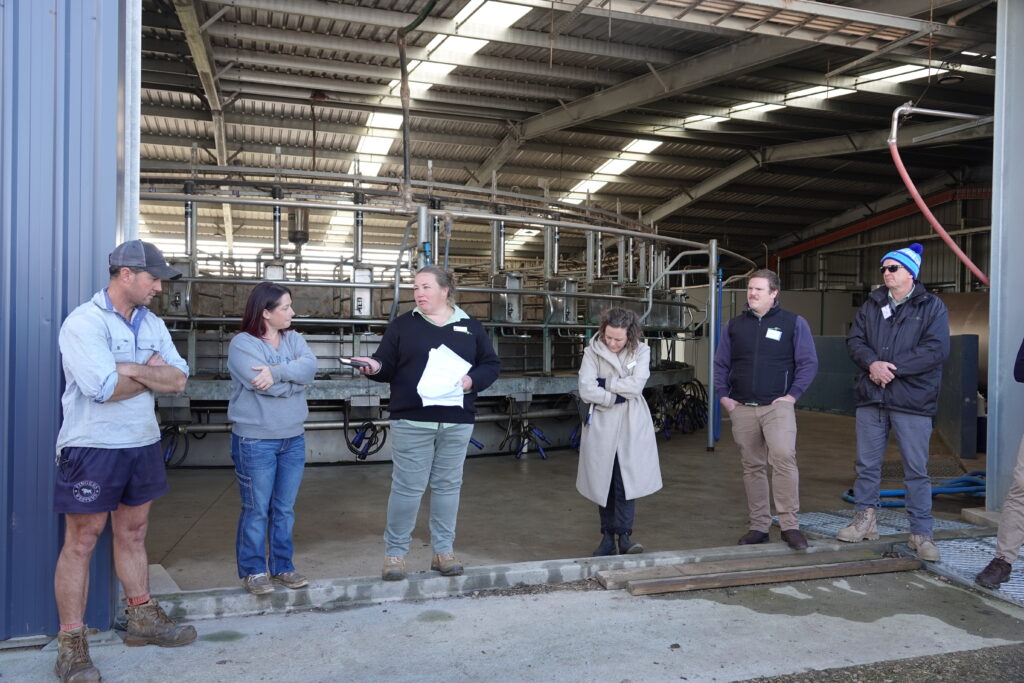
The Lake Wellington Irrigator Reference Group meets four times a year to have robust conversations around irrigation and explore opportunities to improve water use efficiencies and deliver cutting edge change on the ground.
“The current group has left a fantastic legacy for the region and now it’s time to welcome some new voices to the conversation,” said Sustainable Irrigation Project Officer with the CMA, Bonnie Dawson.
Group members play a leading role in supporting the Sustainable Irrigation Program in Gippsland. For the past 25 years, the successful program has worked to reduce the environmental impact of irrigation and increase efficiencies and productivity for busy farmers. As the program expands beyond the Macalister Irrigation District for the first time, members will help deliver the latest round of extension and incentive programs in their local community.
“With more farmers set to benefit from our activities, we’re keen for irrigators across the catchment to get involved, bring their industry expertise to the table and help us drive the program into the future. Farmers along the Latrobe River, producers in Thorpdale and surrounds and all irrigators across the Lake Wellington Catchment are encouraged to apply,” said Bonnie.
Supported by staff from both the CMA and Agriculture Victoria, members will be remunerated for their valued time and input.
Current member Rod Warren said being involved in the group has helped him make decisions about upgrading infrastructure on his dairy farm in Winnindoo. “Being part of the reference group has been a rewarding experience. A highlight for me was being involved in the irrigation demonstration trials, which really got people thinking about ways they can improve efficiencies on their own farm. I would strongly encourage anyone thinking about joining the reference group to give it a go,” said Rod.
Agronomist and fellow member Liz Semmens agrees. “It’s been an amazing experience to be able to participate in the group. I’ve enjoyed seeing the younger members come through and challenge the ‘norms’ with more AgTech and progress to stay up to date with world best practice. There has also been significant growth toward collaboration between agencies and the opportunity to get a seat at the table is one I am grateful for.”
For more information, contact Bonnie Dawson from the CMA for an initial conversation at bonnied@wgcma.vic.gov.au or call 0448 037 461.
Expressions of interest close on Friday, 6 June 2025.
This program is a part of the Department of Energy, Environment and Climate Action’s Sustainable Irrigation Program (SIP), implemented in Gippsland by Agriculture Victoria and the WGCMA.
West Gippsland CMA is responsible for over 40,000 kilometres of designated waterways across the region and delivers programs for healthy and resilient catchments. All these waterways flow to the Victorian coast, discharging through the Gippsland Lakes, or directly into Bass Strait and the Southern Ocean.
Become a river lover
Find out more about the work we do and sign up to our e-news for updates.
Popular Irrigation Incentive program set to benefit even more Gippsland farmers
West Gippsland Catchment Management Authority (the CMA) and Agriculture Victoria (Ag Vic) are pleased to open a new round of farm plan incentives, and for the first time, farmers in Warragul, Thorpdale, Noojee and Perry Bridge and across the entire Lake Wellington Catchment are eligible to apply.
Up to $10,000 per farm is available through the Lake Wellington Irrigation Efficiency Incentive Program to help with the cost of a professionally designed irrigation plan.
“A farm plan sets down on paper the irrigation design for an individual property,” said Alexis Killoran Senior Irrigation Extension Officer from Agriculture Victoria. “This can be a simple irrigation system, right up to a detailed survey and design with integrated farm infrastructure. “The final farm plan provides a comprehensive document to refer to whenever the farm business is ready to implement the planned design.”
“Designing an irrigation farm plan is the first essential step for any irrigation renovation,” said Brad Missen, Irrigation Development Coordinator at the CMA.
“Through the Irrigation Incentives Program, the CMA and Agriculture Victoria will work with you to develop a plan and design that’s tailored to your property and farm business.”
“As part of the farm planning process, the business goals and values, irrigation design, water use efficiency, staged development, and any environmental or statutory requirements are considered and planned for,” Brad explained.
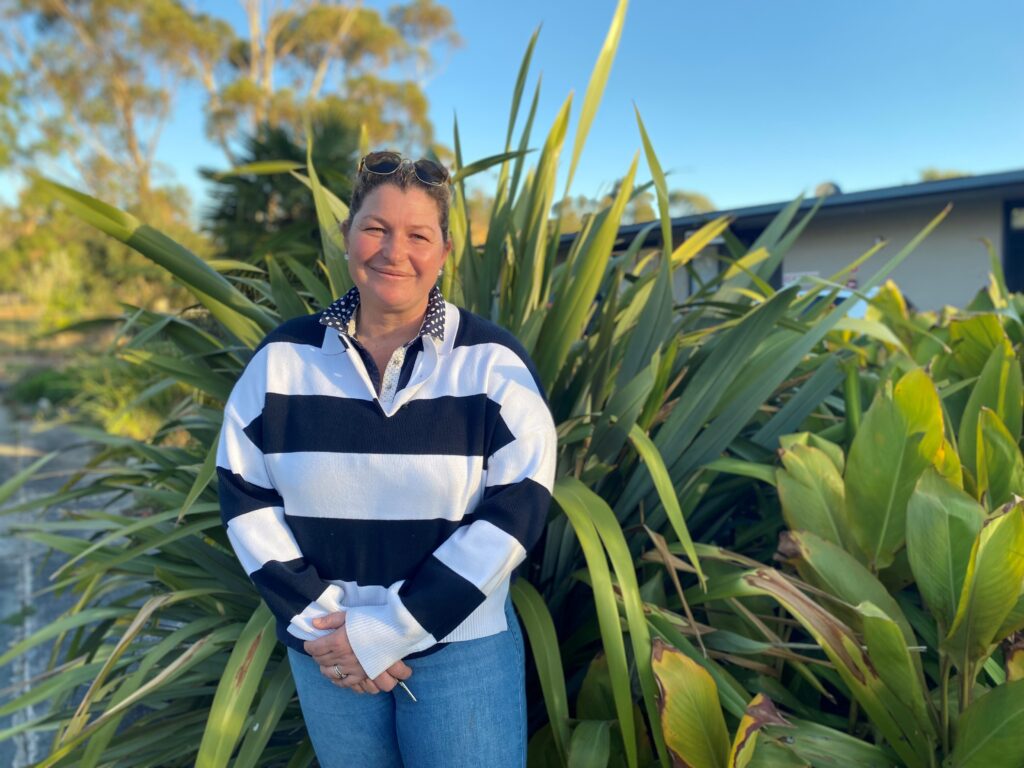
Boisdale beef farmer Nicky Reeves recommends the program: “I had lots of support from the Ag Vic team through the farm planning process. They provided different points of view, and together we found ways to solve the irrigation problems on farm.
With their help I felt comfortable interacting with statutory authorities to make sure everything was compliant and approvable, and the rules and regulations were explained so that they made sense, and I understood why they were necessary.”
The Irrigation Efficiency Incentives Program has been running in the Macalister Irrigation District for 25 years with irrigators helping to retain 46 gigalitres of nutrient rich water, carrying an estimated 23 tonnes of phosphorus, on-farm every year.
“That’s a huge load of phosphorus being kept out of the waterways and the Gippsland Lakes and wetlands and it’s thanks to those farmers who put their hands up to get involved in our sustainable irrigation programs that we’ve been able to see these great results,” said Brad.
We want to continue supporting as many irrigators as possible which is why we’re excited to expand the program outside the Macalister Irrigation District,” said Brad.
“If you’ve never had an irrigation farm plan developed before or it’s been over ten years since you’ve made any irrigation improvements, now is the time to do it.”
Applications are now open with funding allocated on a first-come, first served basis, you can call the CMA for more information on 1300 094 262.
The Lake Wellington Irrigation Efficiency Incentive Program is run by West Gippsland CMA and Agriculture Victoria and funded by the Victorian Government’s Sustainable Irrigation Program.
Irrigation Efficiency Incentives for Gippsland farmers
Overview
Rebates for irrigation planning and design are now available for farmers in Central and West Gippsland.
The CMA and Agriculture Victoria will work with you to develop an irrigation plan and design that’s tailored to your property and farm business.
The rebate program helps with the cost of the plan so you can maximise return on your infrastructure upgrades or investment.
Funding
Rebates of up to $10,000 are available to eligible farms for the following activities:
- New Irrigation Farm Plans
- Updated Irrigation Farm Plans
- Tailored Irrigation Farm Plans
Funding is allocated on a first-come, first-served basis.
Eligibility
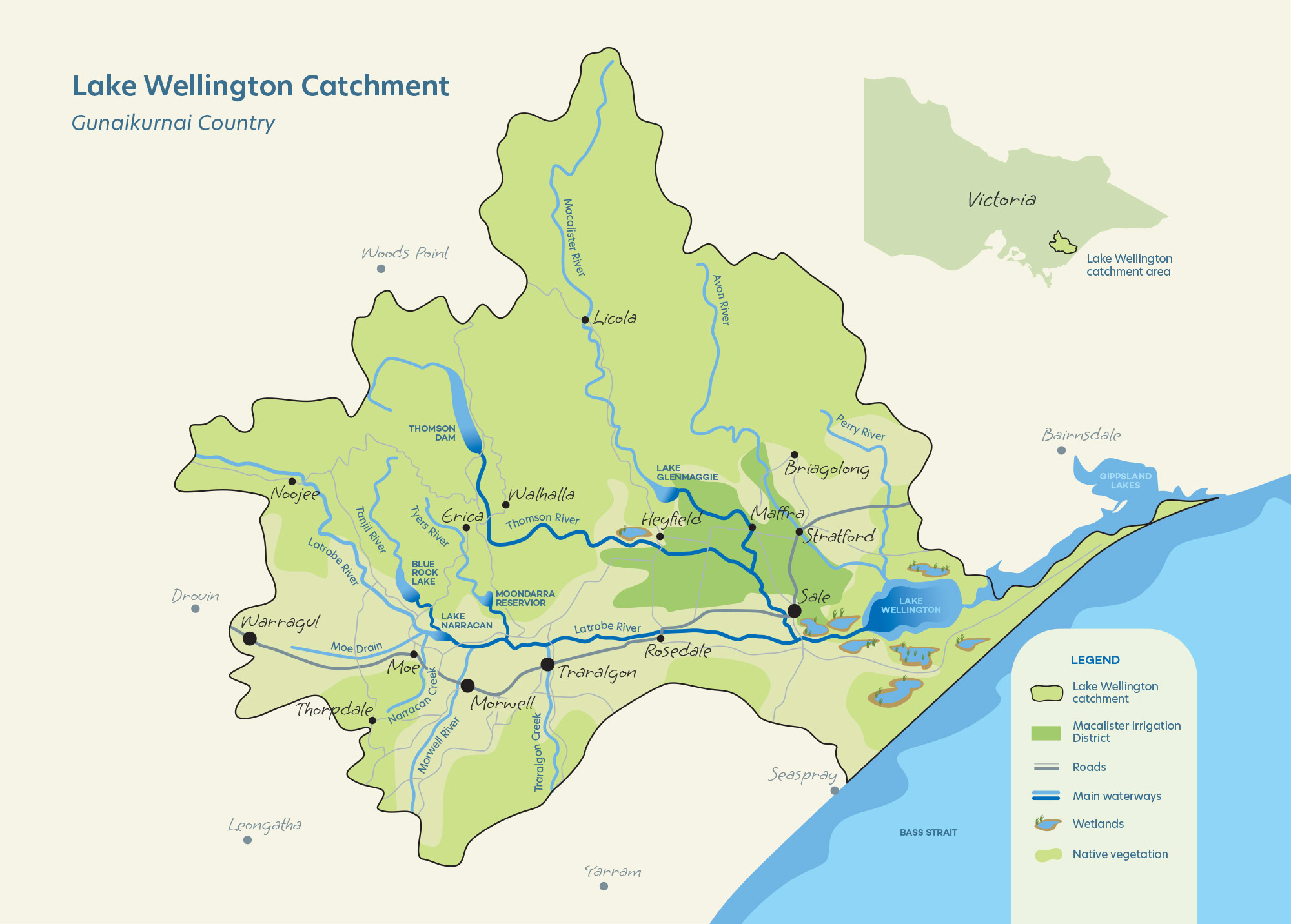
In general, you can apply if you have a licence to irrigate and are located within the Lake Wellington Catchment.
The Lake Wellington Catchment spans West and Central Gippsland, and includes Warragul, Noojee, Thorpdale and Perry Bridge as well as the Macalister Irrigation District.
Other criteria:
- The proposed area has not previously had a survey and design completed with the assistance of the Irrigation Efficiency Incentives Program; or
- The existing farm plan for the property is more than 10 years old; or
- You can demonstrate, with confirmation from Southern Rural Water, that the supply system changes (e.g. modernisation of supply channels, pipelines and outlets) have opened up new opportunities for improvements on farm.
Guidelines
You can download a copy of the Landholder Booklet (PDF – 1.2 MB)
Contact
Brad Missen, Irrigation Development Coordinator at the CMA on 1300 094 262.
Page updated 11 July 2025