
It’s National Tree Day this Sunday, 31 July and it’s also planting season for West Gippsland Catchment Management Authority (WGCMA). Over 60,000 seedlings are ready to plant and play their important role in flood recovery and catchment health across the region.
Grown in local nurseries, the trees will be used at a variety of project sites across West Gippsland. Over 40 indigenous species make up the mix including gums such as Mountain Grey, Southern Blue, Swamp Strzelecki, Manna, Swamp, Gippsland Red, River Red, Blue Box, Yellow Box and River Peppermint along with Swamp Paperbarks, Blackwood and a variety of shrubs and ground covers.
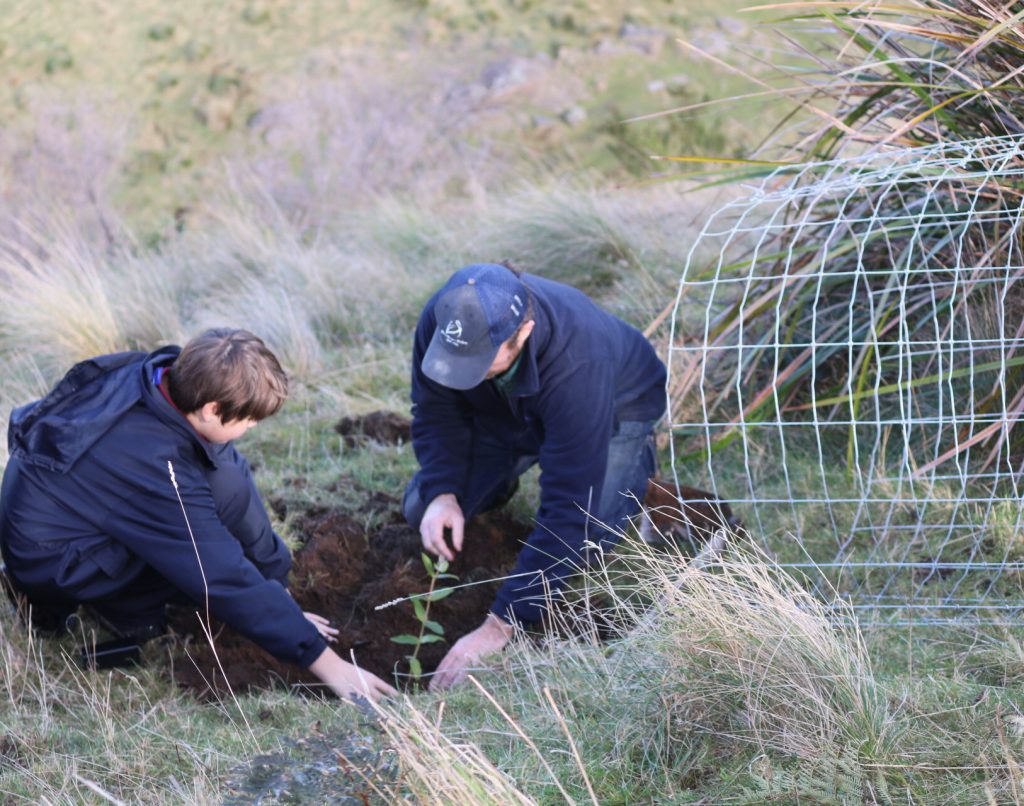 Matt Bowler and a school student planting trees at the Agnes River planting day, August 2019
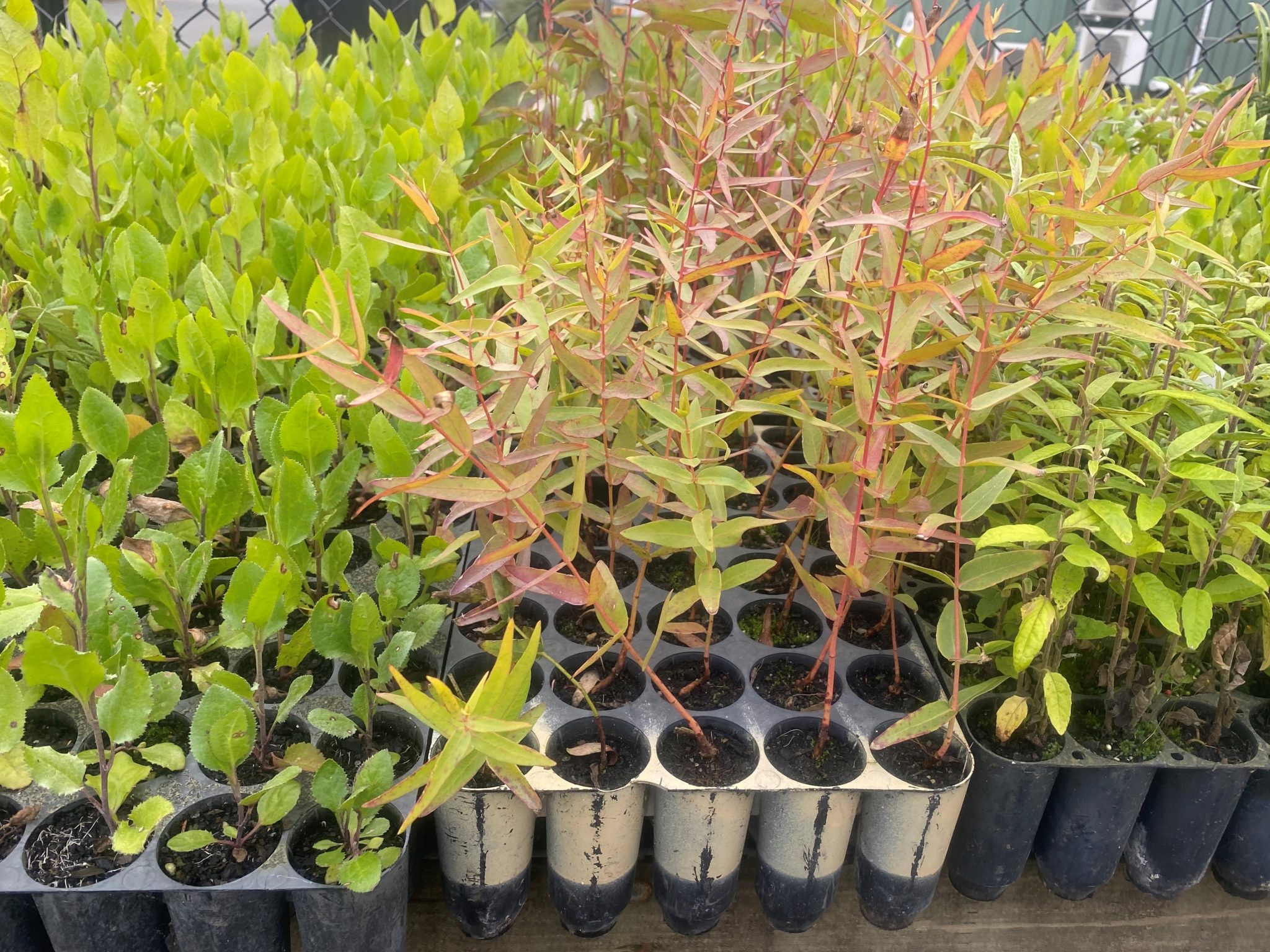 Tubestock waiting to be planted
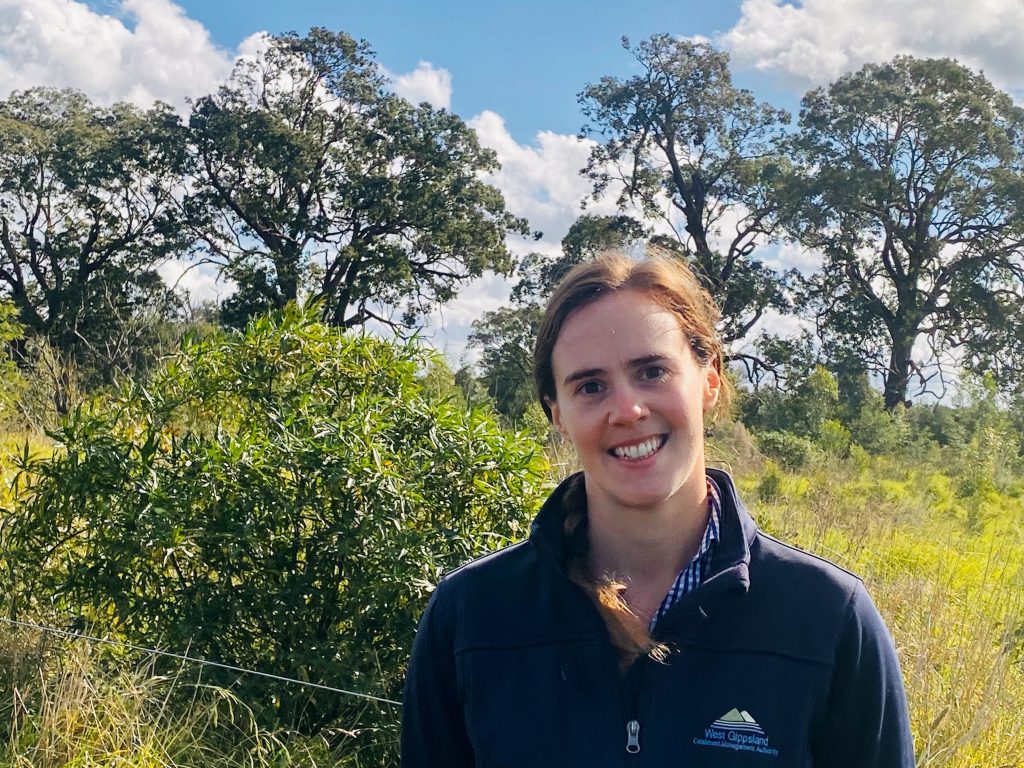 WGCMA staff member Elsa Burnell standing with some Blue Box trees
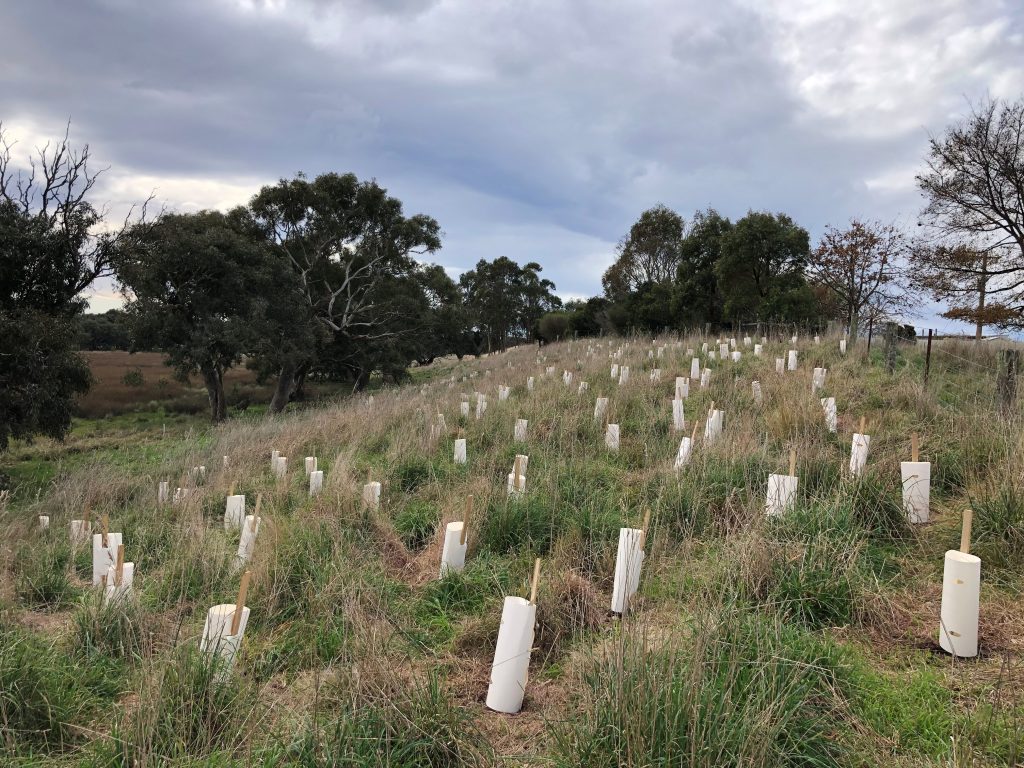 Revegetation along a wetland on the Avon River
Trees upstream improve water quality
At the east of the catchment, Richard Allen, WGCMA’s Project Delivery Coordinator is leading the plantings and said: “Planting out the areas next to waterways marks the last step in river restoration. It usually follows fencing and weed removal, and provides stability for riverbanks, habitat for wildlife and improves water quality downstream.”
This is significant as the creeks and rivers to be planted over coming months flow into important waterways such as Corner Inlet. The WGCMA has just completed 1.9 kilometres of fencing along Lamont Creek – a tributary that flows into the Agnes River near Toora and on into the internationally acclaimed Corner Inlet.
Funded by the Australian Government’s Fisheries Habitat Restoration Program, the recent works were undertaken in partnership with the landholder and link up 1.6 kilometres of fencing previously completed by the WGCMA.
Matt Bowler, Project Delivery Manager for WGCMA said: “It may seem unusual that works on a tributary are part of a Fisheries Habitat Restoration, but catchments are connected and protecting areas upstream improve water quality along the whole river course and into the sea. “These latest works are part of a larger project to fence off a total of 75 hectares of saltmarsh, mangrove and swamp scrub habitat adjoining the Corner Inlet Ramsar site – a haven for birds, fish and other wildlife.”
“Once complete, the program will restore six hectares of seagrass and protect 12 hectares of rivers using a whole of catchment approach – showing works that happen upstream on the land flow down to benefit the sea through improved water quality and increased habitat for fish.”
“This latest section of river to be fenced, and planted builds on existing work in the catchment and forms part of the bigger picture to protect and fence the Agnes in its entirety and contribute to the continuity of the tributaries.”
“Positive steps such as this upstream flow downstream into the Agnes and then on into Corner Inlet,” said Matt, “it also proves the power of partnerships as we work along waterways – we can’t do it alone.”
Trees also the key to flood recovery
At the northern end of the catchment, Project Delivery Coordinator, Delivery Coordinator, Elsa Burnell is busy working with landholders and partners Gunaikurnai Land and Waters Aboriginal Corporation (GLaWAC) to revegetate sites where flood recovery works have been undertaken, willows removed and to enhance and restore wetlands.
“All the works we do such as bank stabilisation, weed removal and fencing is preparation for putting plants in the ground – it’s the culmination of the project. Trees and shrubs provide the essential last step in flood recovery acting like the reo in concrete to stabilise banks and to slow the water down in future flooding events”, says Elsa.
One planting site is on private land along the Rainbow Creek near Cowwarr. Works on this potential avulsion (where a waterway creates a new path in times of flood) site are part of the EC5 funded Mid-Thomson River Flagship Waterway project that seeks to address the risk of avulsion across the agricultural land between the Thomson River and Rainbow Creek. Fencing and earthworks have been undertaken to armour the banks, slow the water, stabilise the soil and stop erosion. Planting 4,500 trees will be the last stage of works to protect the area for the future.
“Everything you do leads to the planting – it’s the long term legacy,” concluded Elsa.
Established in 1996, National Tree Day has grown into Australia’s largest community tree planting and nature care event. The program is a call to action for all Australians to get their hands dirty and give back to their community.
These projects are supported by the West Gippsland CMA, through funding from the Australian Government’s National Landcare and Fisheries Habitat Restoration Programs, and Victorian Government’s EC5 funding.
West Gippsland is a special region with precious environments, diverse waterways and coastlines. West Gippsland Catchment Management Authority (WGCMA) is proud to play a part in meeting the future challenges for water in the region by delivering its fourth Regional Catchment Strategy – essentially a ‘blueprint’ for catchment health and care for the next five years.
Available online at a dedicated website, the West Gippsland Catchment Management Strategy 2021-2027 (RCS) covers challenges at a local scale under the themes of Biodiversity, Coast and Marine, Community, Land, Traditional Ownersand Water with an overarching theme of Climate Change.
The documents are the key strategic frameworks for natural resource management in Victoria and are prepared by Victoria’s Catchment Management Authorities every six years. They outline how on-ground work contributes to implementing government policies and targets, whilst also incorporating the knowledge and priorities of local communities.
Martin Fuller, CEO of WGCMA said: “We are delighted to prepare this strategy on behalf of West Gippsland. It reflects many voices because it is the result of a genuine collaboration between government and non-government organisations, Traditional Owners, and the broader community.”
Mikaela Power, WGCMA Board Chair said: “The Strategy is divided into local areas to reflect the priorities and interests of West Gippsland’s communities and to show how agencies and communities work together to deliver integrated catchment management at the local scale. The local areas of Bunurong Coastal, Corner Inlet and Nooramunga, Gippsland Coastal Plains, Gippsland Lakes and Hinterland, Great Dividing Range and Foothills, Latrobe, Strzelecki and Wilsons Promontory demonstrate the diversity and significance of the region. “We invite everyone to explore the RCS, learn about our region, and get involved, by working together, we can protect and improve the health of our catchments for future generations.”
Key sub-strategy completed
In addition, WGCMA has completed one of the key sub-strategies and planning documents linked to the RCS. The Regional Natural Resource Management (NRM) Plan: Regional Land Partnerships Program 2022 complements the Regional Catchment Strategy by:
- Describing the regional context and stakeholder aspirations as they relate to the Australian Government’s priorities and investment programs.
- Identifying regional priorities aligned to the Regional Land Partnership investment priorities for Ramsar sites, threatened species, threatened ecological communities and sustainable agriculture.
- Identifying project concepts and actions that will contribute to the five-year Outcomes and investment priorities of the Australian Government’s Regional Land Partnerships Program.
RCS key facts:
- Regional Catchment Strategies are the key strategic frameworks for natural resource management in Victoria
- Victoria has 10 Regional Catchment Strategies, covering each catchment management area
- Regional Catchment Strategies are prepared by Victoria’s Catchment Management Authorities every six years on behalf of the Victorian Government and are sent to the Minister for Water for approval
- Regional Catchment Strategies are developed collaboration with Traditional Owners and regional agencies, organisations, groups and communities
- Traditional Owners play a key part in development and the 2021-27 Regional Catchment Strategies recognise their role as the voice for Country, their ecological knowledge, aspirations and status in planning and action
- Regional Catchment Strategies are the overarching plan for the integrated management of land, water and biodiversity, including support for communities, agriculture and sustainable development
- Regional Catchment Strategies describe how land, water and biodiversity is managed across each region, assess its current condition and find targets for its future health
- Regional Catchment Strategies outline how on-ground work contributes to implementing government policies and targets, whilst also incorporating the knowledge and priorities of local communities
- Regional Catchment Strategies are founded on the principle that collaboration by many organisations is vital to achieve environmental improvement
- Regional Catchment Strategies highlight the important roles and plans of councils, government agencies and other organisations and groups
- Regional Catchment Strategies identify each region’s significant challenges and set informed and measurable targets for improvement.
Over the past week, West Gippsland Catchment Management Authority (WGCMA) has coordinated artificial openings of Bourne Creek and Powlett River estuaries that naturally closed in February this year.
The decision to artificially open these estuaries was the result of extensive monitoring and a thorough risk and feasibility assessment process involving WGCMA, Parks Victoria, Regional Roads Victoria, and Bass Coast Shire Council.
WGCMA CEO Martin Fuller said: “It’s a careful balance. Estuary closures are natural events that provide many environmental benefits. However, they also pose risks to surrounding assets by inundating farmland, cultural assets, roads and recreational infrastructure.
“Estuary closures are beneficial to birds, fish and the surrounding saltmarsh and wetlands. These species are adapted to closure events and rely on the inundation that occurs during closure periods.”
“It is the WGCMA’s role to consider all of these risks – environmental, social, cultural and economic – when considering and approving an artificial opening. Ultimately, we are committed to supporting the environmental benefits of natural water cycles and improving the condition of these valuable estuaries in the long term,” said Mr Fuller.
The WGCMA is responsible for monitoring the closure conditions, carrying out the risk assessment and making the decision whether to artificially open the estuary or not.
An Estuary Entrance Management Support System is used to help evaluate the risks and plan the optimal timing of opening an estuary based on all factors.
Regular monitoring of water quality and level, along with river flow and estuary mouth conditions, also informs the risk assessment and decision making.
If an artificial opening is needed, a feasibility assessment is undertaken to make sure water quality, river flows and ocean conditions will provide ideal conditions for a safe and sustained opening.
Parks Victoria undertakes the artificial openings of the Powlett River and Bourne Creek estuaries, if required and it is safe to do so, under WGCMA guidance.
Bass Coast Shire Council coordinates traffic management along the Mouth of Powlett Road and landholder access to the eastern side of the bridge. Regional Roads Victoria manages the Bass Highway that is at risk of inundation from Bourne Creek.
There is more information available on the Powlett River Estuary here.
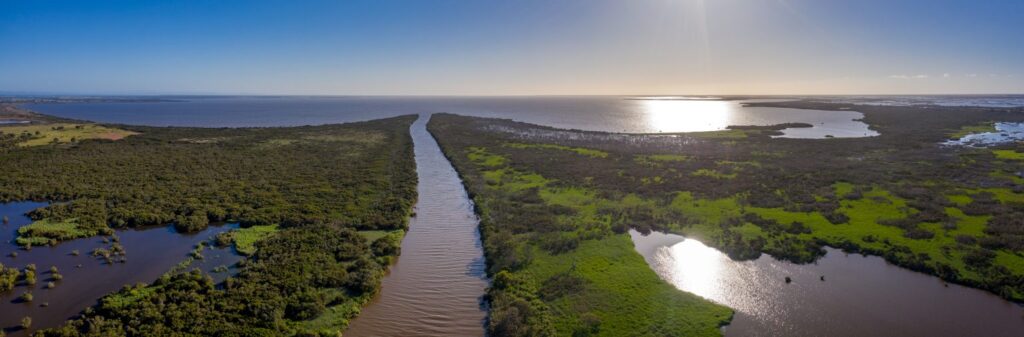
The Powlett River estuary is a significant and ever-changing wetland that provides essential habitat for wildlife. The river mouth closed to Bass Strait in February 2022 and West Gippsland Catchment Management Authority (WGCMA) is monitoring the natural event.
After a wet year in 2021, this year has so far been dry in South Gippsland, resulting in low river flows and natural river closures across the catchment.
Low river flows allow the ocean to develop a sandbar at the mouth of an estuary eventually closing its connection to the ocean.
WGCMA CEO, Martin Fuller, said closures provide critical habitat for many threatened species.
“The Powlett River Estuary is one of many estuaries that has recently closed its connection to the ocean.
“Over the coming weeks, if the Powlett mouth remains closed, we can expect to see water continue to cover the wetlands,” explained Mr Fuller.
“This helps maintain the health of the wetland that surrounds the estuary.
“The wetland provides important habitat and an abundance of food for many species of fish, birds and invertebrates that seek food and shelter, some of which are endangered.”
Mr Fuller explained that it is very important to let this natural process occur, otherwise the integrity of the surrounding wetland and the species it supports maybe jeopardised.
“There is a flow on effect when the river mouth closes,” continued Mr Fuller.
“Algae begins to grow which provides food for insects and fish. The calm waters then turn into a fish nursery and with the increase in fish and insects – birds flock to the wetlands to feed.
“The environmental benefits of the estuary mouth closing cannot be overstated and if the mouth does open naturally, particularly as a result of increased water level height and freshwater river flows, it will trigger fish migration upstream and out to sea,” explained Mr Fuller.
If required, the river mouth may need to be artificially opened. Decisions to open the estuary mouth are informed by the Estuary Entrance Management Support System (EEMSS) and additional data and information collected through onsite monitoring and stakeholder consultation.
Bass Coast Shire Council and Parks Victoria are joint partners in this process. Bass Coast Shire Council works closely with WGCMA and Parks Victoria to monitor conditions and alert residents of road inundation at the Mouth of the Powlett.
“If it is decided that an artificial opening is required, it will only take place if it is deemed safe to do so and can be sustained. This requires a number of things to line up,” Mr Fuller explained.
“In an effort to look for a long-term solution to address this issue, and alleviate the need for artificial estuary openings, the WGCMA continues to work with landholders and other agency staff to explore options for the management of this land moving forward.”
Happy World Fish Migration Day everyone from West Gippsland Catchment Management Authority (WGCMA). The global celebration on 21 May only happens every two years – but connecting rivers to allow migratory species to break free is what WGCMA does every day.
“All fish need to be able to move up and down rivers for food and to breed and 70% of native fish in West Gippsland must migrate between rivers and the sea to survive,” explained WGCMA CEO Martin Fuller.
“Working with the community and partners to restore and reconnect rivers to allow fish to move freely is a highlight of what we do.”
“Fencing and planting of riverbanks restores river health and improves fish habitat. Then the real magic happens when we build fishways and fish ladders to help movement and add water for the environment to trigger migration events,” Mr Fuller explained.
And research reveals that migratory fish are the winners as their river homes are improved and reconnected.
“Work over almost 25-years is seeing a return of healthy rivers able to support the many migratory fish that rely on them to survive and thrive,” says David Stork, Waterways Project Manager for WGCMA.
“This has been achieved by delivering water for the environment in key rivers such as the Thomson and reconnecting the river with a fishway to support migratory native fish like Tupong, Australian Grayling, Australian Bass and eels in their migration.”
“Planned environmental water flows aid migration by releasing the right amount of water, at the right time – giving the fish cues that it is time to move. Flows in autumn and winter support fish to migrate downstream, and spring freshes signal to adults and juvenile fish that it’s time to migrate upstream.”
The story of the migratory Tupong shows the positive impacts of the Thomson River fishway opened in 2019 to connect the upper and lower sections of the Thomson River at Horseshoe Bend. This enabled permanent fish passage to 80 kms of the Thomson and Aberfeldy rivers for the first time in over 100 years.
“The impact was almost immediate. Annual monitoring has shown a return of Tupong populations upstream of the fishway for the first time in 17 years of monitoring.”
The Thomson River is one of the region’s most significant and ecologically important rivers, and the creation of a fishway to allow passage between the Gippsland Lakes to the Victorian alpine region is a state priority.
“World Fish Migration Day is a time to acknowledge work done across the world to connect rivers and we are glad to be playing our part in West Gippsland,” concluded David Stork.
On International Migratory Bird Day this Saturday 14 May, West Gippsland Catchment Management Authority (WGCMA) celebrates the thousands of migratory birds set for take off on their annual migration and asks people to consider switching off their lights to assist these globetrotting birds’ travels.
Light pollution is the chosen theme for the 2022 event with the organising committee stating that the amount of artificial light on the earth’s surface is increasing by at least 2 percent each year, contributing to the death of millions of birds from collisions. Excessive artificial light at night can disorient birds during their migration, leading to fatal collisions with illuminated buildings, communication towers, and other brightly lit structures.
Light pollution can also impact on the timing of migration and other seasonal behaviours by disrupting of birds’ biological clocks. In summary, the committee notes that natural darkness has conservation value in the same way as clean water, air and soil, and should be protected.
“We are lucky that the West Gippsland catchments that support migratory birds, such as Corner Inlet, are away from city lights and are protected through international conventions and programs run by WGCMA and partners,” said Tanya Cowell, Waterways Project Officer for WGCMA.
“Switching off unnecessary lighting to save power and reduce light pollution for wildlife is one simple way we can all help to protect these birds.”
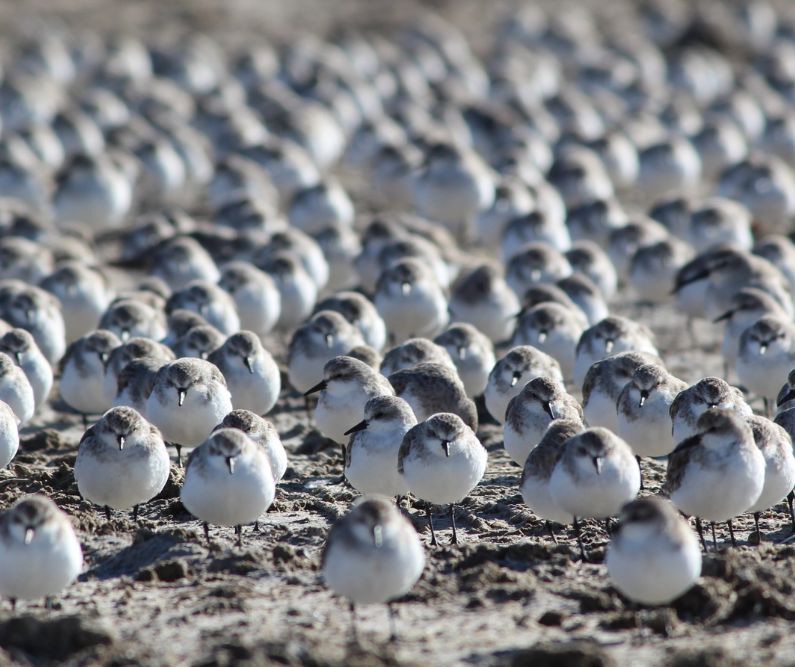
“Corner Inlet is an internationally renowned wetland and important haven for migratory shorebirds that travel incredible distances each year. A favourite of mine is the Red-necked Stint which feeds in Corner Inlet. They are just the size and weight of a matchbox, yet fly thousands of kilometres to nest in the Siberian tundra, before turning around six months later to migrate south once again.”
“Corner Inlet is an internationally renowned wetland and important haven for migratory shorebirds that travel incredible distances each year. A favourite of mine is the Red-necked Stint which feeds in Corner Inlet. They are just the size and weight of a matchbox, yet fly thousands of kilometres to nest in the Siberian tundra, before turning around six months later to migrate south once again.” Corner Inlet became an internationally renowned wetland through the Ramsar convention in 1982. The inlet’s extensive intertidal mudflats provide food for migratory species such as the tiny Red-necked Stint and much larger and critically endangered Eastern Curlew. WGCMA continues to work with partners to protect this special area.
Community representatives from across West Gippsland recently met to kick off the next three-year term of West Gippsland Catchment Management Authority’s (WGCMA) Community Engagement Network.
“The Community Engagement Network or CEN is where we let community members know what work we are doing and priorities we have and they, on behalf of the broader community, can provide valuable feedback on that work and other areas of community interest,” said CEO of the WGCMA, Mr Martin Fuller.
This first meeting of the new term of the network included ongoing and newly appointed community members and was held at the WGCMA’s Traralgon office. The group enjoyed an introduction to the organisation and the vital role working with Traditional Owner groups led by Mandy Leggett, Aboriginal Cultural Heritage Officer for WGCMA.
This was followed by a presentation about what environmental water is, its benefits and how it is managed in West Gippsland from Dr Stephanie Suter, Environmental Water Resource Officer for WGCMA. Dr Zeb Tonkin from Arthur Rylah Institute followed up to share results and insights from research being undertaken on the environmental water flows in local waterways.
There was also plenty of time for members to get to know each other and make connections.
Committee Chair and WGCMA Board member Liz Clay noted that: “Community is really important to the CMA – from planning to partnering to engaging. When CMAs were formed the idea was for local people to take part in managing local places.
Over the years there has been incredible input from this group along with advocacy back to the community. There is a lot of knowledge that is held between these walls.”
Co-Chair and WGCMA Board member Brian Stevens said: “Coming from working with the Aboriginal Community, we value our networks and a good yarn and then we can take it back into Community. There is value in creating space to talk to each other and to listen.”
Executive Manager – Catchment Planning and Delivery for WGCMA, Dan Garlick, sees the new CEN as an important part of the organisation’s work moving into the future. “We are looking forward to working together on priorities such as the Regional Catchment Strategy for example, which will drive how we manage natural resources in the area over the next several years.
This group allows more localised conversations and we will work with the group to make sure we get the best outcomes for the environment and the community.”
The next meeting will be held in June 2022.
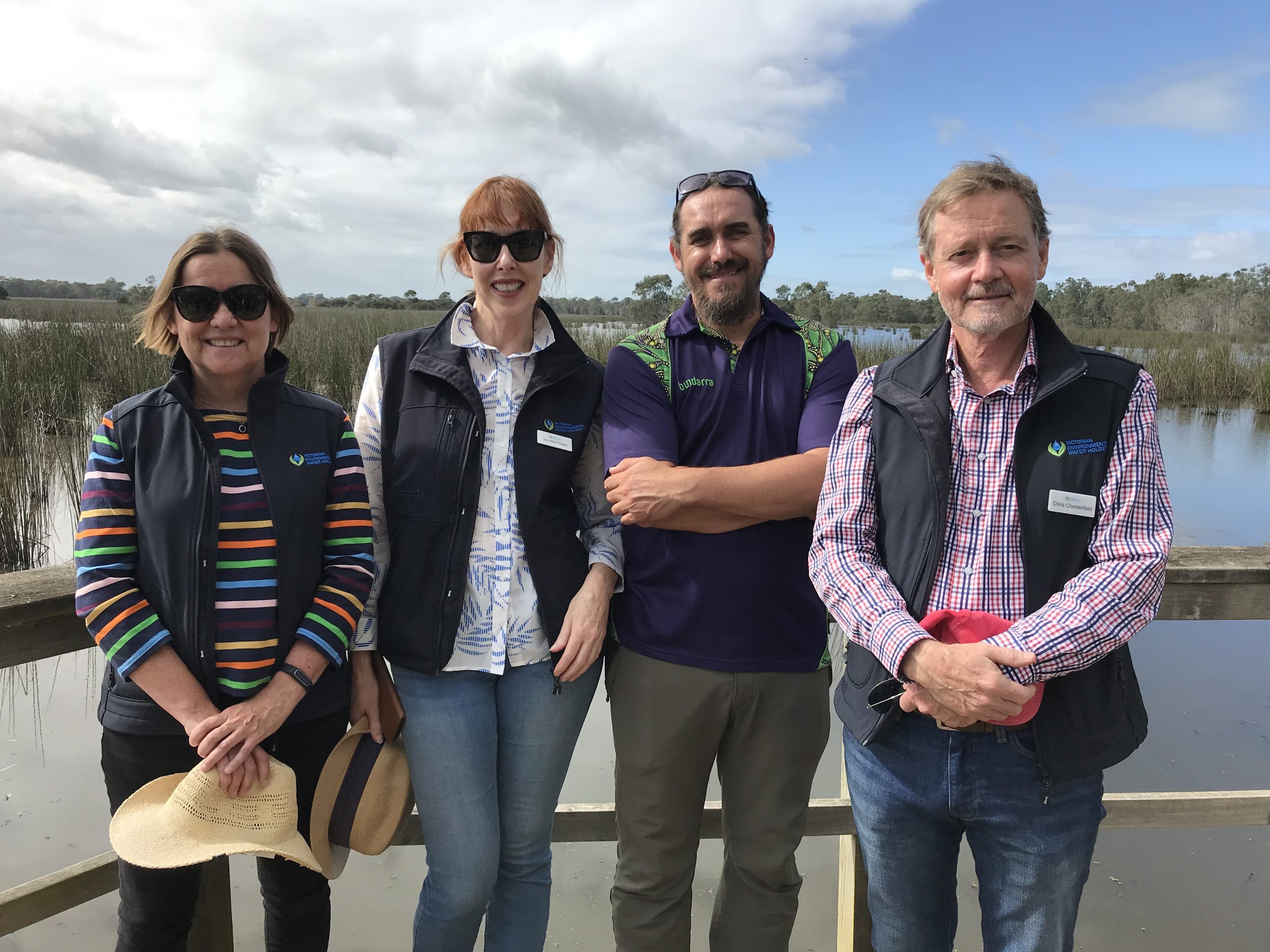 Commissioners from the Victoria Environmental Water Holder
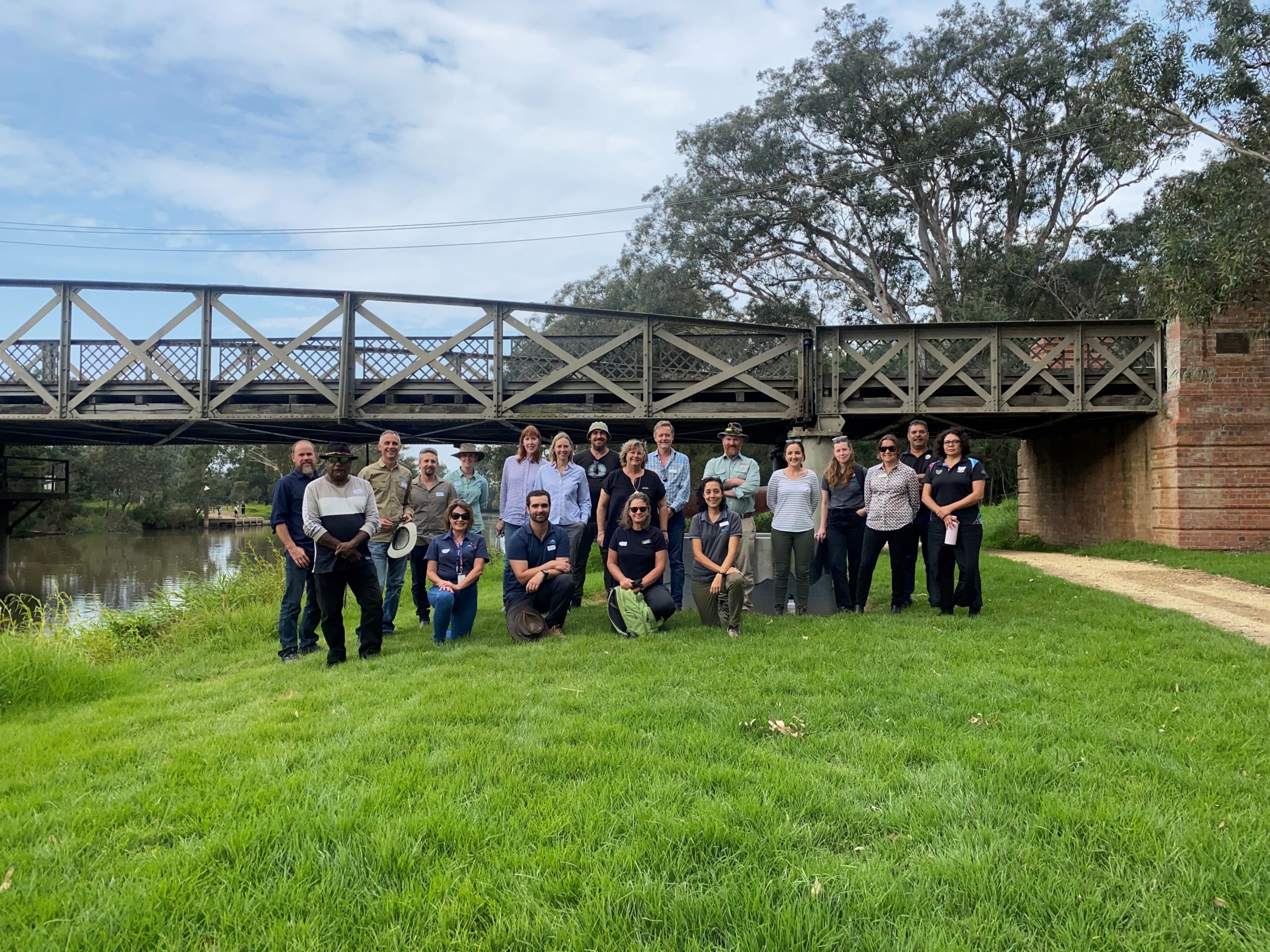 Members of the touring party, talking water in our region
World Water Day formed the perfect backdrop for four Commissioners from the Victorian Environmental Water Holder (VEWH) to visit West Gippsland and see firsthand the challenges and opportunities for water for the environment in the region.
The visit, hosted by West Gippsland Catchment Management Authority (WGCMA) in partnership with Gunaikurnai Land and Waters Aboriginal Corporation (GLaWAC) was a wonderful opportunity to learn, share knowledge and talk about future water allocations and the intrinsic connection that Aboriginal people have had to land and waterways for millennia.
The Commissioners spent two days in the region focusing primarily on the role of water for the environment in the Latrobe River system from the upper reaches to the lower lying wetlands.
A key focus was to visit the Latrobe coal mines to discuss rehabilitation options and their implications for the environment, Traditional Owners and the broader community. Rhonda Hastie, Acting CEO of the Mine Land Rehabilitation Authority, presented to the group and answered questions.
In the lower reaches of the Latrobe, the Commissioners toured a private property to learn about the recent achievements of WGCMA in partnering with landholders to maximise the benefits of water for the environment.
Sale Common and Heart Morass in the Lower Latrobe Wetlands were the site for discussions about what a healthy wetland should look like, and the opportunities for Gunaikurnai Traditional Owners to be more actively involved in environmental water on Country.
The VEWH was established in 2011 and works with catchment management authorities and Melbourne Water to ensure environmental water entitlements are used to achieve the best environmental outcomes with the water that is available.
VEWH Chairperson Chris Chesterfield, explained what water for the environment is and its importance: “Many people expect that rivers and creeks take water from rain and runoff and don’t need anything else. The reality is we’ve taken so much water from the environment for purposes such as irrigating crops and providing water for power stations.
“In the recent decade, the government has provided the environment with legal entitlements for water (known as water for the environment) and we manage those entitlements to ptimise environmental outcomes – whether for breeding fish, waterfowl or maintaining vegetation. The role of the VEWH is to hold those water entitlements across Victoria and work in partnership with CMAs to plan how that water should be used.”
“We had members of GLaWAC on the tour and we are really looking to support Traditional Owners to play much more of a role in the planning and decision making for environmental water,” Chris concluded.
“Traditional Owners want to be at the table, be involved and be part of the decision making. This is important not just for Traditional Owners – it’s also important for the health of Country and the whole community,” said Rueben Berg, a Gunditjmara man and VEWH Commissioner.
“It’s about building partnerships. It gives a voice – for me and the Community and that way things will snowball from there and get better. It’s about healing and protecting and to make it right and the best it can be for future generations,” said Nicky Moffatt, GLaWAC Water Engagement Officer.
“We want to get a greater understanding of what’s happening for the WGCMA and also for Traditional Owners and how we can help determine where our environmental water is best used,” said Peta Maddy, Deputy Chairperson for VEWH.
“We came to talk about some of the more complicated water management issues in parts of West Gippsland. We met with the mine rehabilitation authority and they talked to us about the role that water might play in the rehabilitation of the mines and, as a consequence, talked about the complexities of that. For us it’s about listening, learning, and talking,” reflected Commissioner Jennifer Fraser.
“The visit highlighted the importance of water to Traditional Owners and how aspirations are gaining momentum to be more active in planning and managing water,” said Dan Garlick, WGCMA Executive Manager – Catchment Planning and Delivery.
“I am proud of what we have done in the water for the environment arena and the partnership with GLaWAC. Hearing Traditional Owner colleagues talk on Country about the importance of the CMA and what we have being doing to support them was very inspiring.”
Water for the environment releases are planned based on environmental needs, climate forecasts, past flows, and current science. Planned flows and updates for West Gippsland along with information about Water for the Environment can be found here.
The local experience of landholders, communities and government agencies working together to protect the Gippsland Lakes was recently shared with land managers from the Lake Limboto area of Indonesia.
Staff from the West Gippsland Catchment Management Authority’s (WGCMA) Land Management Team shared the story of improving waterway health over the last twenty years.
The workshops were organised by the Commonwealth Department of Agriculture, Water and the Environment (DAWE) as part of Australia’s MoU with Indonesia on sharing water knowledge and focussed on exchanging case studies on Lake Limboto in Indonesia and Lake Wellington and the Gippsland Lakes more generally.
Populated by subsistence farmers, the Lake Limboto area is affected by sediment and run off having a negative impact on waterway health.
“It was fascinating to see the challenges facing Indonesians which are in some ways similar to those faced here twenty years ago,” said Lands Program Coordinator with the WGCMA Anthony Goode.
“One of the major differences however is the scale of the population around Lake Limboto. Where we might work with a few hundred farmers working medium to large scale businesses, the Indonesian team works with thousands of smaller, subsistence farmers growing corn, avocados or working in aquaculture, so they are quite different approaches needed in the two environments.”
Shayne Haywood, Manager of WGCMA’s Land and Biodiversity Team also joined Anthony Goode to discuss how Gippsland farm businesses have been assisted to change practices. Examples included reducing run off from paddocks entering waterways to mitigate negative impacts on the Gippsland Lakes.
“Initiatives include whole farm plans, which help farmers design the most effective ways to irrigate and save water. Incentives to develop re-use dams where irrigation water that runs off paddocks is stored and re-used rather than allowed to flow into drains and then into the Lakes. Assistance to switch to more efficient irrigation techniques, save water and reduce run off were all discussed and explored,” added Anthony.
“These type of interventions over twenty or so years have seen significant water savings, reduction in nutrients flowing into the Lakes and increased profitability of farm businesses.”
The Indonesian delegates to the online forum were interested to hear more detail on a range of subjects ranging from data management and decision processes to measuring the success of projects over several years.
“They were certainly asking some tough questions by the end, which is great and encouraged us to reflect on both the progress of our work so far and how we might improve it into the future. One of the key aspects of all the work we do are the relationships we have been able to build up over many years with landholders, other government bodies and people like farm consultants to help drive and reinforce the constant need to keep on the path we’re on,” concluded Anthony.
Do you live in and love West Gippsland’s catchments? Would you like to get involved in their management and care? Then this opportunity is for you!
West Gippsland Catchment Management Authority (WGCMA) is currently seeking new members for their Community Engagement Network.
“Community engagement and partnerships are a key area of focus for us and pivotal in achieving natural resource management (NRM) outcomes and the delivery of the Regional Catchment Strategy,” said Tash Marty Cripps, Partnership and Engagement Project Officer for WGCMA.
“The intention of the network is to provide a modern and flexible approach to community engagement, and we aim to engage a wide cross section of the community to exchange information about NRM issues in our region,” Tash explained.
“The Network gets together several times a year in one of West Gippsland’s beautiful catchment areas to take a look at the work we do and discuss issues facing the community. In between gatherings, we will link members and provide them with opportunities for input to relevant plans and strategies.”
Tash has personal experience of the benefits of being a part of this community forum being a member before joining the team.
“The CEN was my gateway to working at WGCMA. It facilitated my learning about their fantastic work around the region, allowed me to meet the friendly staff and helped me understand the natural resource issues being managed. It was also a lot of fun! I mean, who doesn’t want to sit on a picnic rug in a grassy area of the Powlett River and listen to a talk about estuary management or Traditional Owner engagement before an informative beach walk and a delicious lunch?” said Tash.
“It tied in with my interests, allowed me to network with other passionate locals and gave me a voice, for example allowing me to provide my feedback during community engagement workshops for the development of the Regional Catchment Strategy. It was those three years with the CEN that convinced me that WGCMA is a place I’d love to work, to contribute more to the management of our land and water resources across West Gippsland.”
Applications are now open for new members to join for a period of three years and must be submitted by 5pm on Friday 4 March 2022.