
Learn.Irrigate.Grow On-Farm Demonstrations

Learn.Irrigate.Grow is helping local farmers explore new ways to irrigate smarter, improve productivity and protect our waterways.
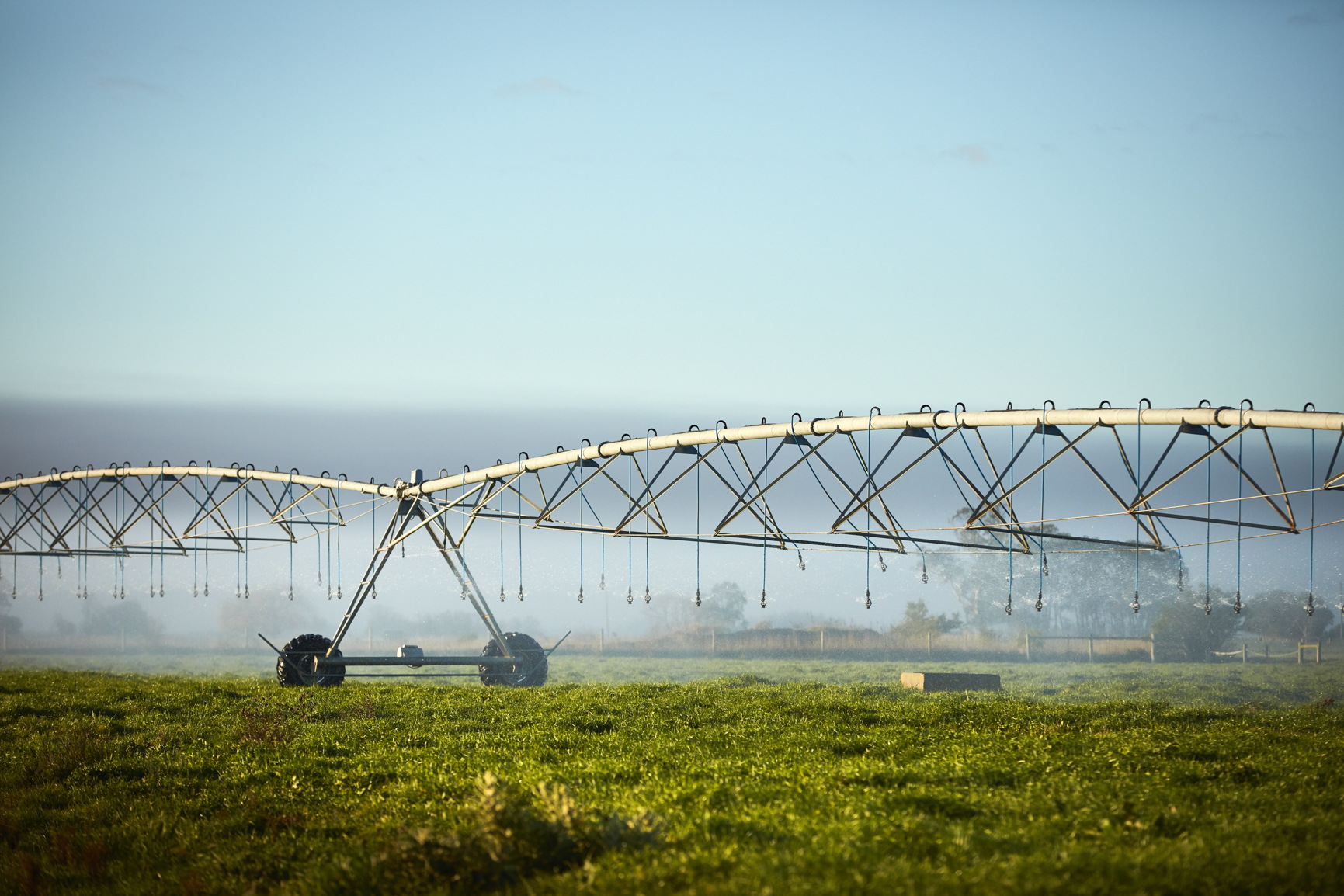
The program is a partnership between West Gippsland CMA, Agriculture Victoria and local irrigators.
Through on-farm demonstrations, farmers are supported through funding and extension support to trial new ideas, share what they learn and help build confidence for others considering similar approaches.
Improving water use efficiency, reducing nutrient losses, increasing farm productivity and adapting to changing conditions are all important challenges for irrigated agriculture.
The program follows a simple idea:
- Learn from real on-farm demonstrations.
- Irrigate using improved technologies and management practices.
- Grow stronger outcomes for farm businesses and the environment.
Expressions of Interest Now Open
Interested in being part of a future Learn.Irrigate.Grow demonstration project?
Expressions of Interest are now open for local irrigators who would like to explore new technologies, management practices or innovative approaches on their farm. Participants receive financial and extension support to trial ideas, monitor outcomes and share learnings with the broader irrigation community.
For more information: view the Learn.Irrigate.Grow Landholder Guide
SUBMIT AN EXPRESSION OF INTEREST:
Submitting an Expression of Interest does not guarantee participation in a project. Applications will be assessed against program objectives and available funding.
Current demonstration Projects
Controlling the uphill flow
Potato farmer Stuart Jennings is looking at how he can save energy and optimise water delivery at his potato farm in Thorpdale.
Stu is testing a new pump and sensor setup to see if he can keep water pressure consistent as it travels up and down hilly terrain.
Transforming irrigation with AI
Rainbow Creek Nuts are exploring whether AI can help them make smarter irrigation decisions on their hazelnut and walnut orchard in Cowwarr.
By integrating sensor data, automation, and artificial intelligence, Chris and Lisa will have the insights they need to save time, labour and money – all at the press of a button.
Digger deeper for soil health
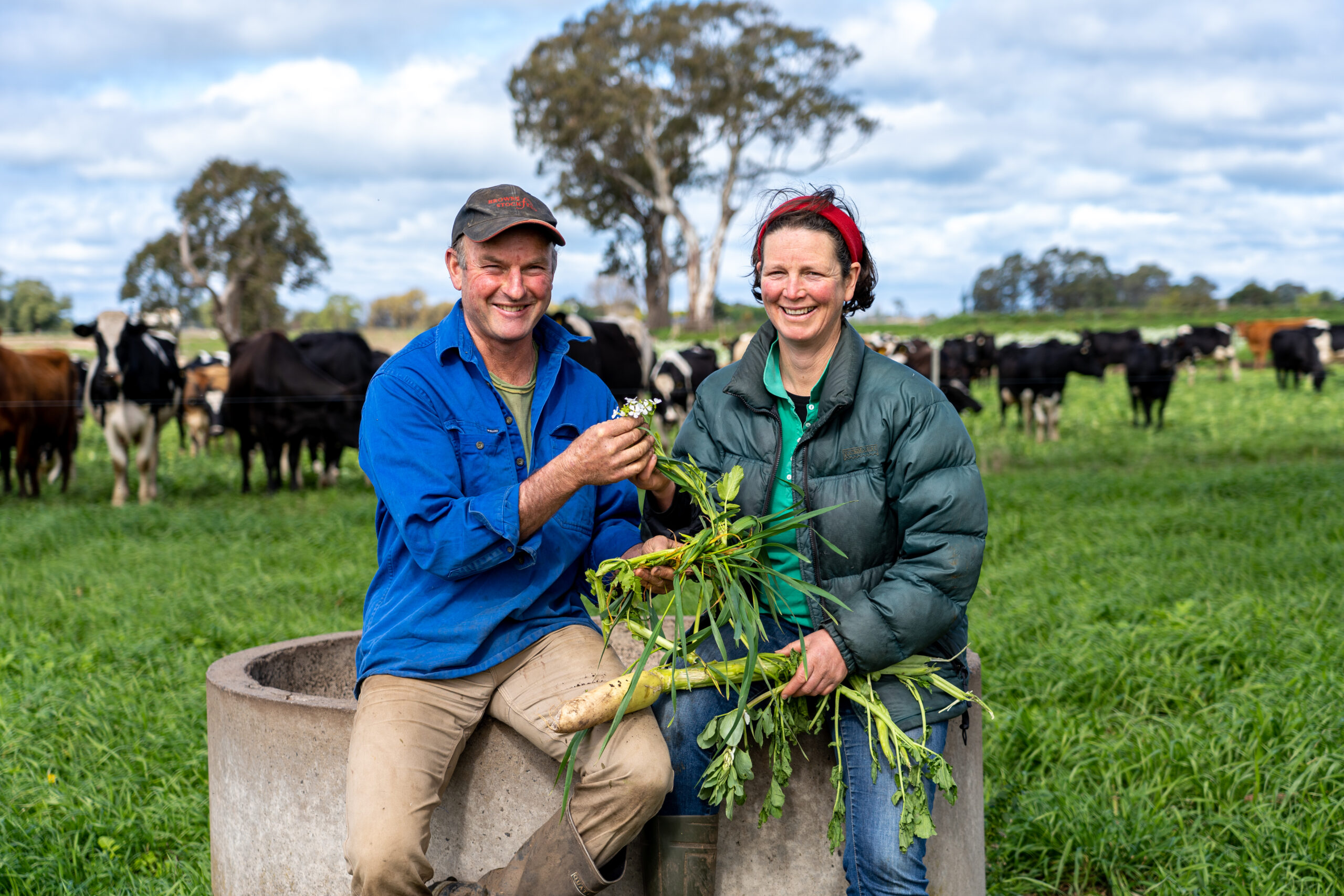
With their focus on regenerative agriculture to improve soil health, increase biodiversity, and reduce reliance on synthetic fertilisers, Kate Mirams and Pete Neaves will take their journey to the next level.
Their project involves monitoring water holding capacity of multispecies versus conventional pastures using soil monitoring probes.
Saving water with solar
Wilco Droppert and Sandra Jefford of Wilandra Farms are using solar power and smart automation to operate a pipe and riser surface (flood) irrigation system at their dairy farm in Airly, near Sale.
Their project aims to show how linking irrigation start times to solar energy availability can help manage water more efficiently, maximise solar use and reduce environmental impacts.
Using GPS to guide the way
Linear irrigators are effective over clear paddock but throw obstacles like large gum trees and power poles in the way and navigation becomes tricky.
Rather than invest in a whole new irrigation system, Nicole and Brendan
of Berry Dairy in Maffra are retro-fitting
a GPS guidance system to their existing irrigator so it can reliably navigate a challenging paddock and improve watering efficiencies.
Previous demonstration projects 2022-2024
Between 2022-24, four irrigators in the Macalister Irrigation District received grant funding to host demonstration sites on their farms. Two focused on best practice management of dairy effluent, with the remaining two focusing on technologies to increase water use efficiency and reduce energy emissions.
Solar powered irrigation
Wilandra farms in Clydebank automated 22 hectares of fixed irrigation sprays, saving time and water while maximising solar energy.
Variable Rate Irrigation
Leathorn Dairies successfully implemented VRI technology on their farm in Newry, saving water and increasing pasture.
Effluent through pipe & riser
The Knights used grant funding to monitor the impact of effluent application on their soil, helping them reduce fertiliser and keep nutrients on farm and out of the waterways.
Self-cleaning effluent filter
Tinamba farmer Tom Gannon trialled a self-cleaning filter on his effluent pump, reducing time-consuming blockages and improving effluent distribution through his centre pivot.